
How Lockout Tagout Kit, Lockout Tagout Kits, and an electrical lockout tagout kit support circuit breaker lockout
For circuit breaker work, the buyer is not purchasing a collection of brightly colored items. The practical objective is to maintain control of hazardous energy while a qualified team performs servicing or maintenance. A kit brings together the portable tools that make a written energy-control procedure usable at the point of work: locks for personal control, tags for communication, breaker-specific restraints, and group-control accessories where the task calls for them.
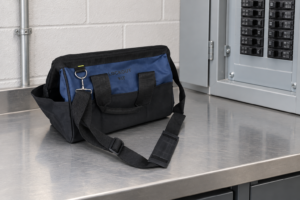
Build circuit breaker control around isolation, device fit, and accountability
The first question is whether the equipment’s energy-isolating device can be secured in the intended safe position. OSHA’s 29 CFR 1910.147 sets employer duties for controlling hazardous energy; it does not prescribe one universal breaker lockout design. A site procedure should therefore identify the disconnecting means, the shutdown sequence, verification steps, and the person authorized to apply and remove each lockout device.
Match the lockout method to breaker construction
Breaker handles vary by profile, width, operating direction, clearance, and available clamping surface. A clamp-style device may suit one moulded-case breaker but not a miniature breaker with a different handle form. Procurement should request representative panel information or conduct a controlled fit check before standardizing. A grip-tight circuit breaker lockout can be considered where the breaker geometry and the manufacturer’s stated operating limits align; it should not be treated as a substitute for compatibility review.
Separate personal control from communication
A Lockout Tagout Kit should make the distinction visible. A lock provides a physical restraint and personal accountability, while a tag communicates the condition, authorization, and warning information required by the site’s program. The tag alone does not solve a device-compatibility problem. In a group task, a hasp, lockbox, or equivalent group-control arrangement may be needed so each exposed worker retains personal control according to the employer’s procedure.
Verify the isolation rather than relying on appearance
Moving a breaker handle to an off position is not, by itself, proof that hazardous energy is controlled. The written procedure should require the applicable verification step before work starts and define how stored or residual energy is addressed. This is a process issue as much as an equipment issue: a well-filled bag cannot compensate for missing authorization, unclear identification, or a skipped verification step.
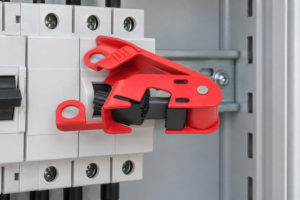
Compare kit value by task readiness, not by item count
The lowest initial item count can create hidden cost when teams must borrow devices, improvise a fit, delay a shutdown, or return to a store room for a missing accessory. Conversely, a large assortment that contains devices unrelated to the installed breaker fleet can sit unused. Buyers should compare the expected work sequence, coverage of documented isolation points, replenishment discipline, and storage durability—not only the number of pieces.
| Kit profile | Best fit | Operational strength | Trade-off to manage | Total-cost consideration |
|---|---|---|---|---|
| Basic personal set | Defined, repeatable individual task | Simple ownership and quick issue | Limited device variety | Low carrying burden; may need supplementation for unfamiliar panels |
| Standard electrical set | Maintenance teams serving several panel types | Broader breaker and communication coverage | Needs an inventory and replenishment routine | Can reduce task interruption when matched to the installed base |
| Industrial group set | Multi-person outages or distributed equipment | Supports group-control workflow and staged storage | Requires stronger procedure, training, and custody controls | Higher coordination value when outages involve several authorized employees |
For a single-panel team, Lockout Tagout Kits with a carefully chosen breaker range may be more economical over time than an indiscriminate assortment. The illustrative calculation is qualitative: if one missing compatible device stops a scheduled task, the cost is not the device alone; it includes supervisor time, equipment downtime, rescheduling, and the risk that personnel feel pressure to improvise. Actual savings depend on the site’s task frequency, labour cost, and shutdown plan, so they should be reviewed locally rather than promised in a catalogue.
Size the assortment from the electrical work map
Kit size should follow the work map: which panels are serviced, how many authorized employees may work concurrently, which breaker families are installed, and whether the team moves between locations. A site with standardized miniature breakers may need a concentrated selection; a facility with legacy panels and mixed moulded-case equipment may need a broader, clearly organized range. A miniature circuit breaker lockout and a moulded-case breaker lockout address different physical configurations, so neither should be assumed to cover the other.
| Application condition | What to survey | Useful kit emphasis | Control point before issue |
|---|---|---|---|
| Routine machine maintenance | Named disconnects and recurring breaker types | Personal locks, tags, compatible device set | Compare devices with the written procedure |
| Mixed electrical panels | Handle shapes, clearances, and operating positions | Segmented breaker-device assortment | Document fit verification for each family |
| Group outage | Concurrent personnel and transfer of responsibility | Hasps, lockboxes, individually keyed personal locks | Follow the group lockout process |
| Mobile contractor work | Travel path, weather exposure, and custody | Portable organized storage and replacement tags | Confirm the host site’s procedure and equipment list |
Standards context: support a program without overstating the product
Procurement should treat an electrical lockout tagout kit as equipment that supports an employer’s energy-control program, not as a stand-alone compliance certificate. OSHA explains its hazardous-energy control expectations in its Control of Hazardous Energy guidance and in 29 CFR 1910.147. The relevant employer must determine scope, employee roles, machine-specific procedures, training, and periodic inspection; a supplier cannot make those program decisions for the workplace.
- OSHA 29 CFR 1910.147 is a U.S. regulatory requirement for hazardous-energy control programs in its applicable scope. It is not a product certification or a universal product test mark.
- ANSI/ASSP Z244.1 is a consensus standard addressing lockout/tagout and alternative methods. Buyers should not represent it as a governmental approval of an individual kit unless supplied documentation supports a precise claim.
- ISO 45001 concerns occupational health and safety management systems. It can inform management-system context, but it does not make a particular breaker lockout device certified by itself.
Unsupported wording can create commercial exposure: it may conflict with tender requirements, mislead distributors, or obscure the employer’s responsibility to assess the intended use. Destination market, installed equipment, and the exact marketing claim should be reviewed together. For padlocks used around electrical work, do not assume universal non-conductivity; the lock body material, metal components, environment, and application must all be evaluated. A nylon safety padlock may be relevant to a specification, but the purchaser should review its material information and task conditions.
Select and control the kit as a working system
- Build a current breaker inventory from the actual panels, including handle geometry and the safe position to be secured.
- Match each isolation point to a documented lockout method, then verify physical fit under controlled conditions before field issue.
- Set the quantity of personal locks, tags, and group accessories from concurrent-work requirements rather than headcount alone.
- Assign storage, inspection, replacement, and training responsibility so an incomplete kit is found before an outage, not during one.
QD LOTO can be considered when a buyer needs configurable safety-lockout components and organized sourcing support for the installed equipment profile. For example, a Lockout Tagout Kit specification can distinguish personal devices, shared breaker devices, and consumable tags, which helps distributors and end users avoid substituting an item simply because it looks similar.
Frequently asked questions
What is included in an electrical lockout tagout kit?
Contents vary with the application, but commonly include safety padlocks, warning tags, hasps, circuit breaker lockouts, and a carrying or storage solution. A group or mobile kit may add lockboxes, cable devices, and spare identification materials. The correct content is the content that supports the documented isolation points and work process at the site.
What is an electrical lockout tagout kit used for?
It is used to help authorized employees apply their hazardous-energy control procedure while servicing electrical equipment. For circuit breaker work, it should help secure the identified breaker or disconnect in its intended safe position and communicate that maintenance is under way. The employer must still establish the procedure, train employees, and require verification appropriate to the task.
Are electrical LOTO padlocks conductive?
They are not universally non-conductive. Material choices can reduce conductive exposure in some applications, but shackle material, internal components, condition, contamination, and the electrical task all matter. Evaluate the product information and the site’s risk assessment rather than inferring suitability from the product category or colour.
What standards do lockout tagout kits meet?
A kit itself should not be described as automatically meeting every applicable standard. In the United States, OSHA 29 CFR 1910.147 governs the employer’s energy-control program within its scope, while ANSI/ASSP Z244.1 is a consensus standard. Ask suppliers for documentation that supports only the specific product claims and test information required by the project.
How do I choose the right lockout tagout kit size?
Start with the equipment inventory, breaker-device compatibility, number of people who may be exposed at once, and whether work is stationary or mobile. Lockout Tagout Kits for a mixed facility often benefit from compartmentalized storage and a planned replenishment list; a narrowly defined task may need a smaller personal issue set. Confirm the final list against the site’s written procedures before purchasing.
What is the difference between a basic, standard, and industrial LOTO kit?
A basic kit normally supports a limited, repeatable personal task. A standard kit extends device coverage for a maintenance team, while an industrial kit is organized for broader equipment variation, group-control accessories, and more demanding storage or logistics. The names are commercial categories, so compare the actual components and intended use instead of relying on the label.
References
- OSHA: The Control of Hazardous Energy (Lockout/Tagout), 29 CFR 1910.147
- OSHA: Control of Hazardous Energy
- ISO: ISO 45001 Occupational health and safety management systems
Reliable circuit breaker lockout is the result of a verified fit, a clear procedure, and personal control at the moment work begins.
When your team is ready to turn its panel survey into a portable issue plan, review QD LOTO’s portable lockout tagout bag and contact QD LOTO to discuss a component mix aligned to your equipment and work process. The final selection should make an electrical lockout tagout kit practical to issue, inspect, replenish, and use as intended.