
When a maintenance coordinator in Leicester updated a machine’s warning signs, the work pack still lacked the approved device for one isolator. This illustrative scenario shows why a clearer sign is not the same as a complete LOTO arrangement. The useful checklist had to connect physical control, worker identification and the equipment procedure, rather than count labels on the enclosure.
Summary: Build a LOTO products checklist around the machine’s energy sources, then add the warning and personal-identification information the procedure requires. A LOTO sign communicates; a suitable lockout arrangement physically restrains the relevant isolator. Under 29 CFR 1910.147(c)(7)(ii), workers must understand that tags are warning devices and do not provide the physical restraint of a lock.
Separate physical hardware, personal tags and area signs
Padlocks, hasps and suitable breaker, valve or other accessories serve the isolation arrangement. Personal tags identify and warn under the employer’s procedure. General area signs may help communicate a rule or locate supplies, but they do not automatically identify the worker applying protection at a particular isolation point.
An equipment checklist should identify which device belongs at each isolator, how it is fitted, the required personal identification and the verification method. A generic catalogue kit or a large danger sign cannot establish those relationships. Include compatible replacement tags and attachments where they are part of the approved arrangement.
| Item | Main role | Limit |
|---|---|---|
| Lockout hardware | Restrain the appropriate isolation interface | Does not define the whole procedure |
| Personal tag | Identify and warn as specified | Does not provide a lock's physical restraint |
| Area sign | Communicate general information | Does not establish personal protection |
| Equipment procedure | Define sources, roles and verification | Must match actual equipment and task |
Maintain tags and the equipment checklist together
Tags must remain legible and understandable for the environment. Review moisture, contamination, handling and the expected exposure rather than assuming every printed tag is suitable. Keep the wording and identification format consistent with the employer’s standard, and make the connection to the isolation point unambiguous.
Where the OSHA tagout-device attachment requirements apply, 1910.147(c)(5)(ii)(C)(2) specifies non-reusable, hand-attachable, self-locking and non-releasable attachment means with at least 50 pounds unlocking strength and the stated design characteristics. This is not a requirement for every general wall sign. The device selection overview and worker identification and key-control guidance help define the related hardware and ownership records.
| Checklist field | Question | Update trigger |
|---|---|---|
| Isolation-point reference | Does it match the current procedure? | Equipment or source change |
| Device and padlock | Is the exact combination approved? | Model substitution or damaged hardware |
| Tag and attachment | Is identification readable and suitable? | Damage, loss or exposure change |
| Stock and training | Can authorized staff obtain and use it? | Shortage or identified procedure gap |
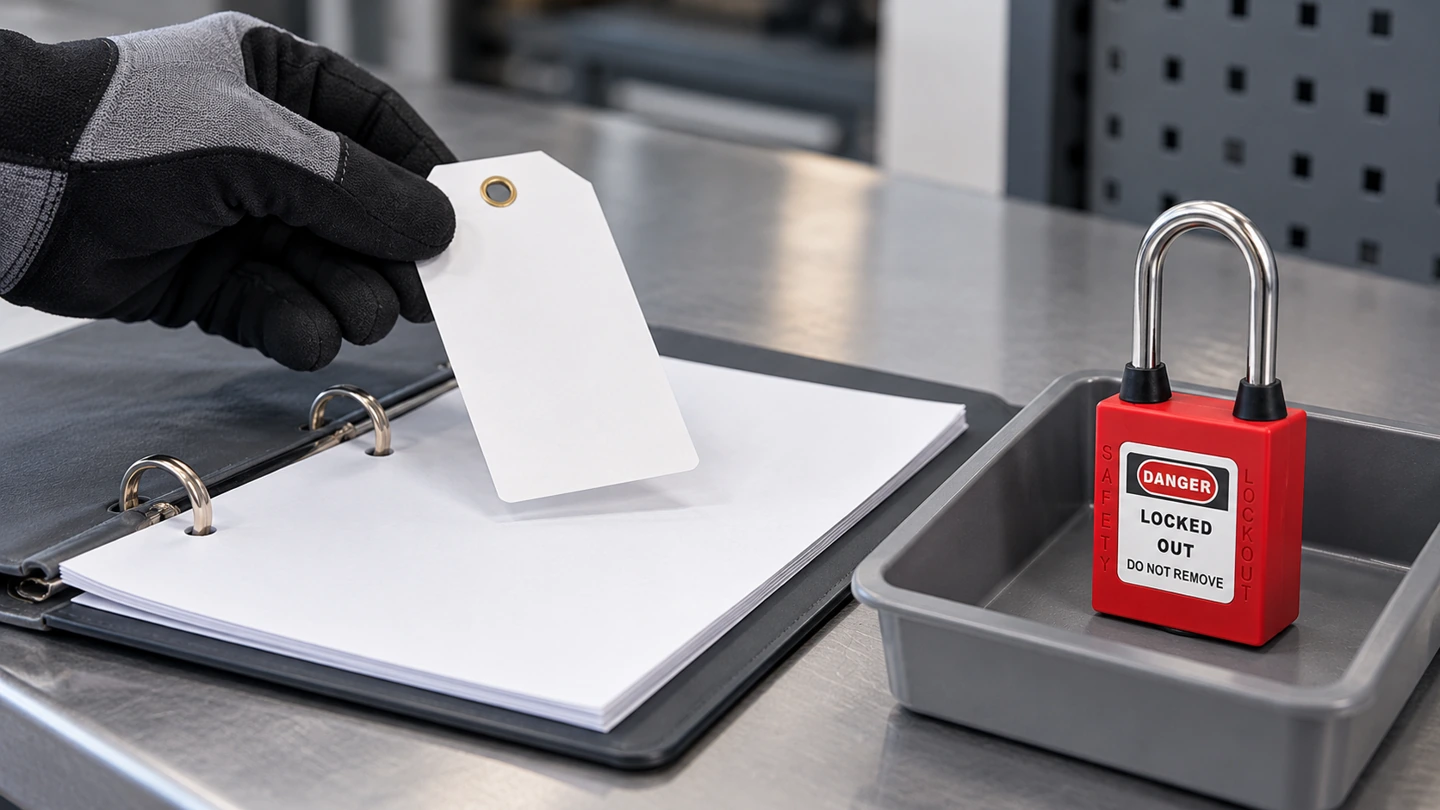
Apply tagout rules without treating a warning as equivalent isolation
29 CFR 1910.147(c)(2) and (c)(3) distinguish lockout and tagout arrangements, including conditions for use and full employee protection where applicable. An employer cannot simply substitute a tag for a lockable device because tags are easier to obtain. The determination belongs within the applicable program and task assessment.
Training under (c)(7)(ii) must address tag limitations, attachment, legibility, durability and the false sense of security tags can create. Procedure inspections at least annually under (c)(6) are separate from a stock or sign check. OSHA does not certify a product checklist as complete merely because it includes danger wording.
Purchase against a controlled equipment checklist
Confirm the source and isolator list, approve the hardware combination, define personal identification and attachment specifications, and assign stock and revision ownership. QVAND LOTO products can be reviewed against that list. Include consumable tags, attachments and replacement control in the cost comparison. If the enquiry begins with signs, establish whether the real need is area communication, personal identification or physical lockout before recommending a product.
Frequently asked questions
How should LOTO signs be selected alongside physical isolation devices?
Choose signs for their actual communication role and separately specify the approved physical devices. The equipment procedure should identify what belongs at each isolation point.
Which products depend on the equipment being serviced?
The isolators, device interfaces, energy sources, stored-energy hazards and job arrangement determine the hardware. A universal piece-count list cannot establish coverage for every machine.
Why is a general LOTO sign not a complete energy control procedure?
A general sign does not define source isolation, personal responsibilities, stored-energy control or verification. Those must be established in the equipment-specific process.
What attachment requirements should a tagout-device specification address?
Where OSHA’s tagout-device attachment clause applies, specify the required attachment characteristics and minimum 50-pound unlocking strength. Do not apply that product requirement indiscriminately to every general wall sign.
How should a tag correspond to the isolation point in the written procedure?
Use matching, current references and the placement required by the approved arrangement. Avoid identifiers that could point to another machine or isolator.
Why should employees be trained on the limitations of tags?
Tags warn but do not provide the physical restraint of a lock, and workers can otherwise develop false confidence. Training must explain their limitations within the applicable program.
What should happen if a personal tag becomes damaged or unreadable?
Maintain protection while following the employer’s controlled replacement process. Do not leave personal identification unresolved or remove another person’s device simply to replace a label.
References
- 29 CFR 1910.147 — Control of hazardous energy
- CCOHS — Lockout/Tag out
- CCOHS — Hazardous Energy Control Programs
Every item on the checklist needs a defined role; a warning cannot silently take the place of restraint.
Compare the relevant QVAND product options against your documented application, and contact the team with the actual equipment details, photographs and evidence requirements.