
Summary: Industrial isolation works when the hardware, the warning message, and the verification step support the same procedure. OSHA’s 29 CFR 1910.147 requires employers to control hazardous energy, train employees, and inspect each procedure at least annually; warning tags communicate status, but they do not replace physical restraint or zero-energy verification. For most buyers, the practical recommendation is to specify devices by isolation point first, then standardize tag fields and materials by environment and audit need.
Why device-and-sign pairing matters in hazardous energy control
Hazardous-energy control is a system, not a shopping list. A padlock, hasp, breaker cover, cable device, or valve enclosure only performs well when the written sequence identifies every energy source, defines shutdown and isolation steps, addresses stored energy, and requires a test or attempt to operate the equipment after isolation. The purchasing implication is straightforward: components must support the exact field procedure rather than a generic “one lock fits all” assumption.
Why a warning tag is information, not isolation
That distinction matters when buyers evaluate tags. Under OSHA, tagout devices are warning devices indicating that equipment may not be operated until the tag is removed under an established procedure. A tag improves visibility and ownership, yet it does not provide the same physical restraint as a lock. If a site uses tagout alone, the employer must provide equivalent protection through additional measures.
Where delays, rework, and exposure usually start
Most field failures begin with specification gaps: a breaker lockout that does not match the toggle geometry, a valve device that cannot clear the wheel or lever, or a tag stock that loses legibility in oil, washdown, or UV exposure. Small mismatches create maintenance delay, improvised workarounds, and weak audit records. ANSI/ASSP Z244.1 is useful here because it broadens the conversation from device purchase to task-based risk reduction and control selection.
Safety Lock Out devices: matching hardware to isolation points
The first procurement question is always, “What is the energy-isolating mechanism?” Miniature breakers, molded-case breakers, ball valves, gate valves, plug lockouts, and group jobs all create different fit requirements. Buyers should record mechanism type, clearance, handle position, number of workers needing personal control, and environmental exposure before choosing a device family. A compact miniature circuit breaker lockout that fits the actual breaker profile is more valuable than a broader catalog option that only looks compatible on paper.
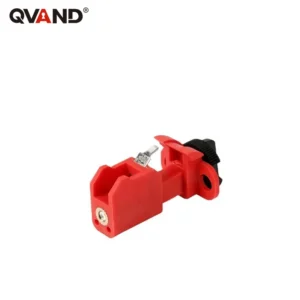
Fit the device to the mechanism, not the catalog category
For electrical points, buyers usually need to check clamping method, breaker throw direction, panel clearance, and whether the procedure requires a personal padlock through the device or an added hasp. For valves, they should verify wheel diameter, handle length, and usable clearance. For group lockout, the key question is whether the hardware preserves individual employee control from isolation through restart.
Treat materials, keying, and identification as cost drivers
Material choice affects lifecycle cost more than appearance. Nylon components may suit electrically sensitive areas; heavier-duty polymers may perform better where impact, chemicals, or weathering matter; stainless or coated metal parts may be justified where corrosion resistance is critical. Keying structures also change administrative burden. As an illustrative calculation, if a plant manages 200 service interventions a month and a 5% mismatch rate adds 12 minutes of rework each time, that is 20 labor hours lost monthly before production delay is counted.
In practice, Safety Lock Out is only reliable when the device fits the point, the keying plan matches accountability rules, and the written procedure tells the worker how to verify zero energy before touching the asset.
What a lock out for safety sign must communicate
A good warning tag does three jobs at once: it warns against operation, identifies the responsible person or team, and preserves a traceable status message during the maintenance window. The most useful tags balance visibility with discipline. They should provide space for employee name, department or contractor, date, equipment reference, and a restart restriction such as “Do Not Operate,” while staying consistent with the employer’s language control and training program.
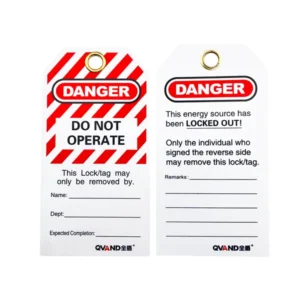
Message content should support the audit trail
For many sites, the best design is not the tag with the most text; it is the tag with the fewest fields needed to drive correct behavior. A lock out for safety sign should identify who applied it, what equipment is affected, what restriction applies, and whether the organization requires a permit number or work-order reference. Multinational buyers may also need bilingual layouts, local color conventions, and attachment methods that survive washdown or abrasion.
This is why many procurement teams standardize tag stock and attachment separately from the locking hardware. A durable hanging tag may suit indoor panels, while harsher service may need reinforced or PVC-based formats similar to dedicated warning scaffold tags for repeated handling and clearer condition marking. The content rule stays the same: the sign should reinforce the procedure, never substitute for it.
Comparing common device-and-sign combinations
Buyers often compare devices by unit price, but the better comparison is operational fit plus total cost of ownership. The table below focuses on how common combinations behave in real maintenance settings.
| Combination | Best fit | Strengths | Main watch-out | TCO tendency |
|---|---|---|---|---|
| Personal padlock plus individual tag | Single authorized worker on a clear isolation point | Strong ownership signal; simple training; easy audit trail | Fails if the lock cannot physically fit the point or if the tag fields are incomplete | Usually efficient when procedures are stable |
| Breaker lockout plus personal padlock and tag | Electrical panels with task-specific isolation | Good visibility at the control point; scalable across many assets | Breaker geometry mismatch creates returns and rework | Lower cost when panel survey is accurate |
| Valve lockout plus weather-resistant tag | Fluid, gas, or steam service indoors or outdoors | Clear warning at the valve; good for process isolation | Clearance and handle-size variation matter more than catalog photos suggest | Moderate; improved by application-specific sizing |
| Hasp or group box plus named personal locks | Multi-person maintenance or shutdown work | Preserves individual control; supports contractor coordination | Administrative complexity if keys, tags, and shift changes are unmanaged | Higher setup effort, often lower incident exposure |
| Cable device plus tag set | Irregular or multiple isolation points | Flexible routing; useful for unusual geometries | Can be overused where dedicated hardware would secure the point better | Best as a controlled supplement, not a default |
Application matrix: where combinations fail first
The next table expands the decision by application, which is usually the most practical way to specify mixed lockout inventories for distributors and multi-site buyers.
| Application | Typical challenge | Device priority | Tag priority | Procurement note |
|---|---|---|---|---|
| Electrical control cabinets | Different breaker profiles within one plant | Exact breaker compatibility and padlock clearance | Legible employee and equipment identification | Sample real breaker models before standardizing |
| Process valves | Wide variation in wheel and lever sizes | Correct enclosure diameter or handle capture | Visibility in wet or outdoor conditions | Sort by valve family, not by one “universal” promise |
| Contractor shutdown work | Multiple employers and shift overlap | Group-control hardware and key discipline | Name, company, and restart restriction clarity | Document ownership rules before issuing kits |
| Washdown or chemical areas | Moisture, chemicals, and fading | Corrosion-resistant materials and simple geometry | Durable stock, attachment strength, and print permanence | Test label legibility after exposure, not only at receipt |
| Remote or outdoor utilities | Weather and long maintenance windows | UV and impact resistance with secure closure | High-contrast message fields that remain readable | Plan replacement cycles as part of site upkeep |
Standards and compliance boundaries buyers should check
Three standards references shape most industrial conversations. OSHA 29 CFR 1910.147 governs employer hazardous-energy control programs in the United States. ANSI/ASSP Z244.1 addresses control of hazardous energy with a broader risk-based framework. ISO 14118 concerns prevention of unexpected start-up and can matter in global machinery safety discussions. Buyers should understand the scope of each document before turning standard names into product marketing claims.
The compliance boundary is simple but often misunderstood: OSHA regulates employer programs and enforcement obligations; it does not certify padlocks, tags, or stations as “OSHA-certified” products. A manufacturer can support compliance with suitable designs, documentation, testing information, and consistent labeling, but the employer remains responsible for procedure quality, training, application, and annual inspection. Unsupported claims can create legal exposure, rejected tenders, or credibility loss during customer audits.
Buying teams should therefore treat Safety Lock Out as a program element, not a product badge. If a supplier cannot explain where a standard is a regulatory requirement, where it is a test method or guidance document, and where a site-specific risk assessment still governs the choice, the commercial risk is higher than the catalog may suggest.
Selection checklist for buyers and distributors
For multinational buyers, the practical screening question is whether the supplier can adapt materials, attachment methods, and document packs without turning the lock out for safety sign into a generic tag that ignores the site’s language, accountability, and environmental needs. The strongest sourcing conversations usually cover these actions:
- Survey real isolation points and keep photographs, dimensions, and procedure references together.
- Separate personal locks, group-control hardware, and spare replacements in a defined lockout station layout so issue and return are visible.
- Ask for sample sets that represent the actual breaker, valve, and cable applications instead of approving from one brochure page.
- Review how the supplier handles labeling consistency, replacement parts, export packaging, and technical documentation for distributors.
At this stage it is reasonable to evaluate suppliers such as QD LOTO on configurability rather than slogans. For a manufacturer-exporter, the valuable offer is application-matched devices, stable identification formats, and category coverage across padlocks, stations, valve devices, and accessories so a buyer can build a coherent program instead of a mixed box of parts.
FAQ: common buyer questions
Do warning tags satisfy lockout requirements by themselves?
Usually no. In most situations, a warning tag is a communication device, not a physical restraint. If an employer uses tagout where lockout is not possible, the program must provide equivalent protection through additional measures and still require verification before work starts.
How often should hazardous-energy procedures be reviewed?
OSHA requires a periodic inspection of each energy-control procedure at least annually. Buyers should choose tags and devices that remain legible and functional long enough to support those reviews, especially in wet, dirty, or outdoor environments.
What is the biggest purchasing mistake in mixed-device programs?
The most common mistake is buying by category name alone instead of by actual isolation point. Breaker toggles, valve handles, and multi-point group jobs vary enough that one poorly matched device can create workarounds across an entire line.
Should global buyers standardize one tag design for every site?
Only if the design still fits local language, training, and regulatory expectations. A shared layout can improve control, but the fields, colors, and attachment method may still need adjustment by destination market or operating environment.
What should distributors ask manufacturers before adding a new line?
Ask how the line is mapped to real applications, what sample-validation process is recommended, which materials are intended for harsh environments, and what documentation is available for catalogs and customer training. Those answers usually predict return rates better than a low opening price does.
References and next step
- OSHA 29 CFR 1910.147, The control of hazardous energy
- OSHA hazardous energy control topic page
- HSE: Safe maintenance guidance
- ISO 14118: prevention of unexpected start-up
- European Commission: machinery safety requirements
The safest purchase is the one that still guides the right behavior when the line is down, the pressure is on, and the isolation point is awkward. If you are comparing device families or export-ready documentation, QD LOTO’s valve lockout devices and related categories are a practical place to start the conversation.