
What is a ball valve?
When a fictional EHS manager in Cleveland, Ohio, encountered a pressurized maintenance line, she closed its lever and fitted a lockout cover. The downstream gauge still showed pressure. In this hypothetical scenario, the cause was incomplete isolation, not simply a defective valve: closing the handle had not removed stored energy.
Summary: A ball valve controls flow with a rotating, bored sphere; ordinary two-way designs typically move 90 degrees between open and closed. Closure alone does not establish safe maintenance isolation. Identify the valve and its connections, choose compatible lockout hardware, and verify isolation and residual-energy control under an approved procedure before work begins.
The sphere’s opening aligns with the flow path when open and turns across it when closed. These devices serve process lines, utilities and machinery. Swagelok’s 60 Series catalog gives model-specific examples of quarter-turn operation, materials and operating limits, not universal ratings.
How does a ball valve open and close?
For a conventional two-way unit, a 90-degree stem rotation changes the passage from aligned to blocked. Swagelok’s 60 Series catalog describes fully open or fully closed operation; its three-way switching models use 180-degree operation. Confirm handle travel and flow routing for the actual equipment.
Full-bore designs offer a passage close to the connected pipe’s bore; reduced-bore designs narrow that passage. Pressure loss depends on geometry and flow conditions, not the handle alone. An ordinary shutoff design should not be treated as a modulating control device unless its manufacturer rates it for that duty.
A brass ball valve may suit a specified service, but suitability depends on media, temperature, pressure and local lead restrictions. Swagelok lists brass and stainless-steel options for particular 60 Series models. That does not establish universal potable-water suitability or the same limits across materials.
How do you identify a ball valve connection?
A threaded ball valve must match the mating connection’s standard and sealing arrangement, not merely its nominal size. Swagelok’s thread-identification guide uses taper or parallel form, diameter, pitch and sealing geometry to identify a connection. Check the equipment documentation before ordering replacements.
ASME B1.20.1 covers NPT; ISO 7-1 covers pipe threads where pressure-tight joints are made on the threads, including BSPT forms; ISO 228-1 covers parallel pipe threads where pressure-tight joints are not made on the threads. Similar nominal 1/2-inch NPT and ISO 7 threads can both have 14 threads per inch, yet their profiles differ and they are not interchangeable.
Thread compatibility affects replacement cost. Lockout compatibility instead depends on handle geometry, clearance, secured position and padlock-shackle fit. Pipe-thread size or nominal bore alone cannot establish it.
Why does a closed ball valve still require isolation verification?
A 90-degree handle movement is a mechanical action, not a zero-energy test. CCOHS’s lockout guidance references CSA Z460-20 and identifies line valves as possible energy-isolating devices. Its approach also requires attention to stored energy and verification; selecting a cover is only one part of that process.
For ball valve lockout devices, assess the actual handle and access conditions. A secured handle can prevent operation while internal seat leakage, trapped body pressure or another supply path still creates a hazard. Apply the approved isolation method and verify the relevant energy states before maintenance.
Residual pressure must be controlled through designated, approved means. Never loosen a live fitting to release pressure. HSE’s HSG253 explains that the isolation standard should reflect the plant and hazard; a closed lever is not automatically adequate for breaking containment.
Which ball valve constructions change maintenance costs?
This practical comparison supports planning, not a universal ranking. Design, service and manufacturer instructions determine repairability and life-cycle cost.
| Construction | Practical value | Maintenance and cost consideration |
|---|---|---|
| One-piece | Compact body arrangement | Repair access may be limited; compare replacement labor as well as purchase cost. |
| Two-piece | Separate body components | Service access varies; connection disturbance and resealing can add downtime. |
| Three-piece | Central body between end pieces | Some designs enable easier servicing; check removal clearance and instructions. |
| Trunnion-mounted | Additional support for the sphere | Often selected for demanding duties; seat design and support do not replace isolation verification. |
Body-piece count and ball support describe different dimensions and can overlap. Total cost includes installation, spare parts, planned isolation and downtime; no construction is automatically the lowest-cost choice for every plant.
How does ball valve service change the isolation plan?
| Application dimension | Question to resolve | Maintenance implication |
|---|---|---|
| Compressed-air branch | Can receivers or connected circuits retain pressure? | Identify stored energy and backfeeds; use approved pressure-release and verification steps. |
| Liquid process line | Can liquid remain trapped or pass a leaking seat? | Assess drainage, containment and any stronger isolation method required by the hazard. |
| Hazardous-fluid service | Is handle closure sufficient for the planned intrusive work? | Use a risk-appropriate isolation standard and documented controls before opening the system. |
The application decides the isolation method. The cover must fit that method and the equipment; a photograph or pipe-size label cannot prove suitability.
Which standards inform ball valve maintenance safety?
- ASME B1.20.1, ISO 7-1 and ISO 228-1 address thread specifications. They are not lockout-device certifications or proof that a pressure assembly is safe.
- CSA Z460-20 is referenced by CCOHS for hazardous-energy control. Confirm the applicable edition and workplace requirements rather than treating guidance as a product approval.
- OSHA 29 CFR 1910.147 governs hazardous-energy control for covered US general-industry servicing and maintenance. Applicability, exceptions and required procedures depend on the work.
- HSE HSG253 provides safe-isolation guidance for plant and equipment. Its risk-based approach does not mean every closed line valve is sufficient for every intervention.
A personal safety padlock helps control authorized operation within the site’s procedure; it does not test the seal or remove pressure. Unsupported approval claims can lead procurement teams to accept unsuitable hardware. Assess documentation and destination-market obligations separately from marketing language.
How should you select ball valve lockout hardware?
- Identify the equipment, handle arrangement, normal operating position and planned maintenance hazard.
- Check handle geometry, clearance and the device’s secured position; verify shackle compatibility and resistance to unintended operation.
- Review the approved isolation procedure, including stored pressure, seat leakage and alternative supply paths.
- Confirm instructions, identification and individual or group-lockout arrangements before putting hardware into service.
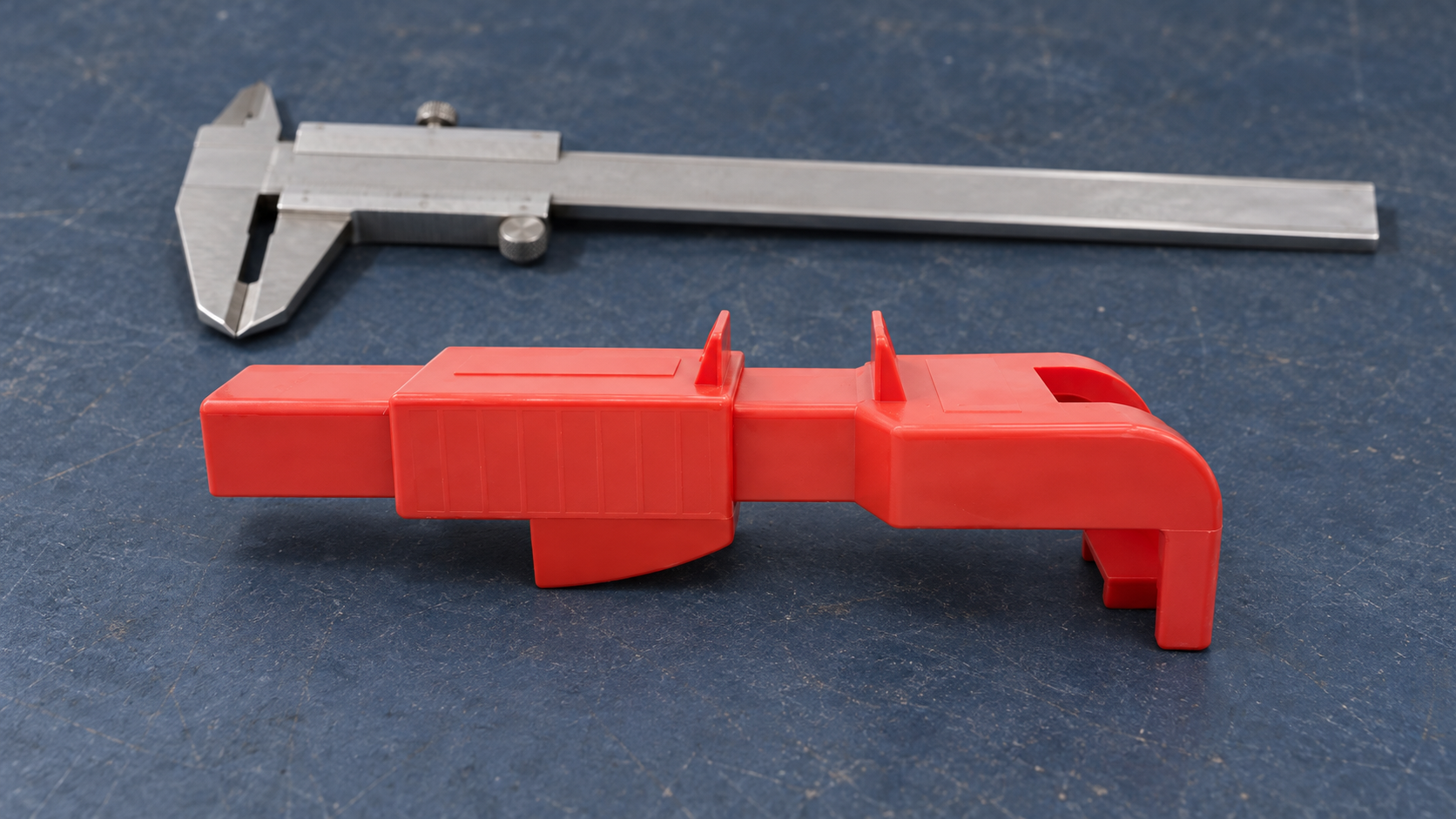
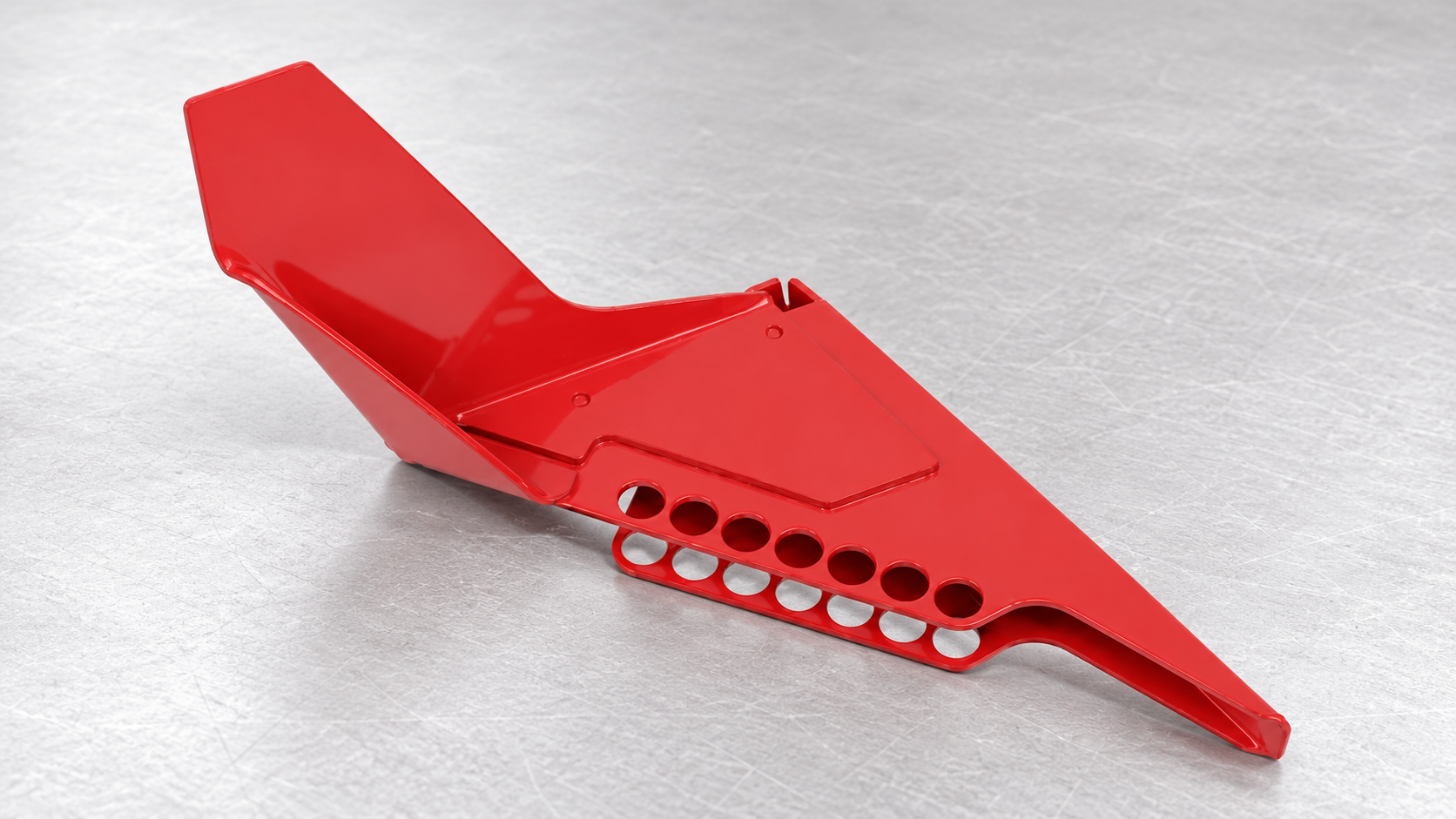
QD LOTO supplies valve-lockout devices and safety padlocks, not the valves explained here. Its range includes the red polypropylene M-H17 adjustable valve-lockout device and red coated-steel M-H07 hand-rod wedge-style restraint. Check current fit documentation and test fit against handle dimensions, stop geometry, clearance and shackle size.
What ball valve questions should buyers resolve?
What are the four types of ball valves?
One practical construction grouping is one-piece, two-piece, three-piece and trunnion-mounted. It is neither exhaustive nor mutually exclusive: body-piece count and ball support can overlap. This is not an OSHA classification; use the manufacturer’s design description for selection.
What is the purpose of a brass ball valve?
It opens or shuts off flow in services compatible with its materials and ratings. Brass is a material choice, not a guarantee of drinking-water compliance, corrosion resistance or temperature capability. Check the exact model, media and applicable lead restrictions.
What thread are ball valves?
Threaded models may use NPT, BSPT or BSPP connections; others have different end connections. Identify the standard, size, pitch and sealing geometry from documentation or a suitable identification process. Similar-looking threads must not be forced together.
What are four types of valves?
Ball, gate, globe and butterfly are four common examples, not the only valve types. They differ in closure mechanism and intended service. Choose for the process first, then assess the compatible energy-isolation and lockout arrangement.
References
- Swagelok: 60 Series ball-valve catalog — manufacturer-specific operation, materials and ratings.
- Swagelok: Thread and End Connection Identification Guide — thread standards and identification.
- CCOHS: Lockout/Tag out — hazardous-energy control and verification.
- HSE: The safe isolation of plant and equipment, HSG253 — risk-appropriate isolation planning.
A closed handle is a position; verified isolation is a condition.
Review QD LOTO’s lockout products and contact the team with handle photos, clearance details and padlock requirements. Confirm fit within your site’s isolation procedure before deployment.