
OSHA 1910.147 is 29 CFR 1910.147, The control of hazardous energy (lockout/tagout), an industrial safety standard issued by the U.S. Occupational Safety and Health Administration (OSHA).
When a maintenance supervisor in Cleveland encountered a conveyor fault in an illustrative scenario, she pressed Stop before opening a cover. The belt moved again within seconds: the process had stopped the controls without isolating the energy source.
Summary: OSHA 1910.147 aims to prevent injury from unexpected startup, energization, or release of stored energy during servicing. Its energy-control program has 3 core elements: procedures, employee training, and periodic inspections. Identify every hazardous energy source, isolate it, and verify isolation before work begins.
The regulation governs covered U.S. general-industry servicing and maintenance; it is not a universal global mandate.

OSHA 1910.147 protects workers from unexpected startup and hazardous energy.
The standard addresses electrical, mechanical, hydraulic, pneumatic, chemical, thermal, and other hazardous energy. A machine can remain dangerous after its motor stops: a suspended load can fall, an accumulator can retain pressure, or a spring can move a component. Section 1910.147(d) sets out 6 stages for applying energy control, ending with verification of isolation before servicing starts.
Under 1910.147(a), coverage depends on the work and exposure. Normal production can fall within scope when a worker removes or bypasses a guard, or enters a danger zone. The minor-servicing exception requires the task to be routine, repetitive, and integral to production, with effective alternative protection; it is not a general shortcut for quick jobs.
The cord-and-plug exception applies only when unplugging controls the hazard and the plug remains under the servicing employee’s exclusive control. Electrical work also requires consideration of separate electrical-safety rules.
Select safety padlocks for the isolating device, employee identification, and the site’s key-control policy.
OSHA 1910.147 requires procedures, training, and inspections to work together.
Section 1910.147(c)(1) requires an energy-control program covering procedures, training, and periodic inspections. Documented procedures normally identify shutdown, isolation, device placement and removal, and verification responsibilities. The exception to documenting an individual procedure applies only when all 8 conditions in 1910.147(c)(4)(i) are met; a simple machine alone does not qualify.
Authorized employees perform the lockout/tagout; affected employees operate or use the equipment, or work in the servicing area. Training must match those roles. Under 1910.147(c)(6), the employer must inspect energy-control procedures at least annually, using an authorized employee other than those using the procedure being inspected, and certify the inspection.
Procedures must also cover group work, shift handovers, outside contractors, and testing that temporarily requires energization.
OSHA 1910.147 distinguishes physical restraint from a warning tag.
A lockout device physically holds an energy-isolating device in a safe position. Push buttons, selector switches, and similar control-circuit devices are not energy-isolating devices. Under 1910.147(c)(2), use lockout when the isolating device accepts a lock unless the employer demonstrates that tagout provides full employee protection under the standard.
Match circuit breaker lockouts to the installed breaker and verify isolation using the machine-specific procedure.
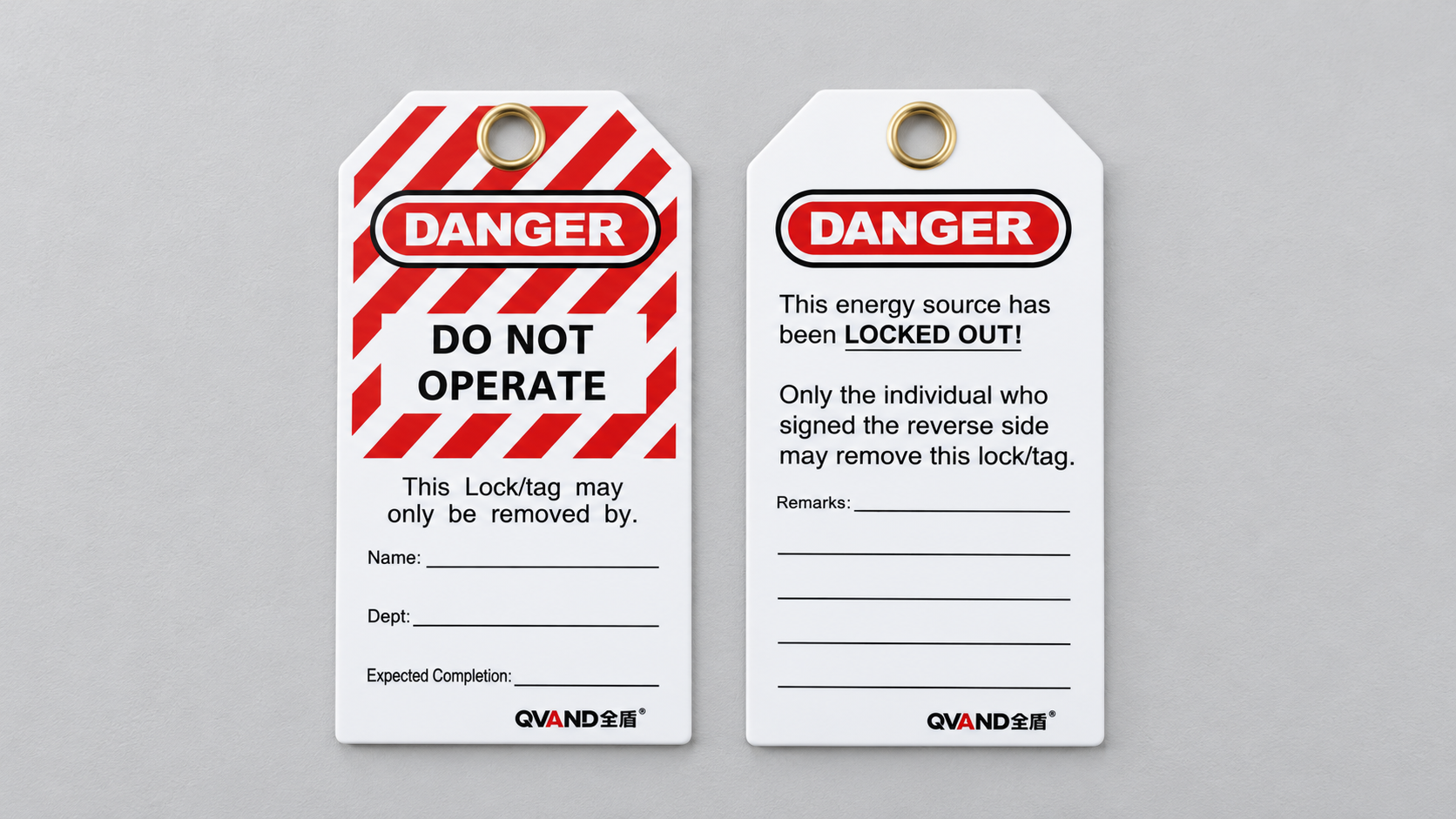
Properly specified lockout tags warn against operation and identify the applying employee; alongside locks, they communicate isolation status and responsibility. A tag does not provide a lock’s physical restraint. Tagout-only systems require the additional protections in 1910.147(c)(3).
Section 1910.147(c)(5) requires devices to be durable, standardized, substantial, and identifiable. Tag attachments must be non-reusable, self-locking, non-releasable, attachable by hand, and have a minimum unlocking strength of 50 pounds, with design and basic characteristics equivalent to a one-piece, all-environment-tolerant nylon cable tie. A tag’s dimensions or material alone cannot establish compliance.
Compare each item’s role in the energy-control system.
| Item | Useful function | Procurement limitation |
|---|---|---|
| Safety padlock | Secures a compatible lockout device and identifies its user | Requires suitable key control, identification, and environmental durability |
| Warning tag | States the prohibition and identifies the applying employee | Does not physically restrain an isolating device |
| Circuit breaker lockout | Provides an attachment interface for compatible breaker designs | Fit must be checked on the actual breaker and isolation arrangement |
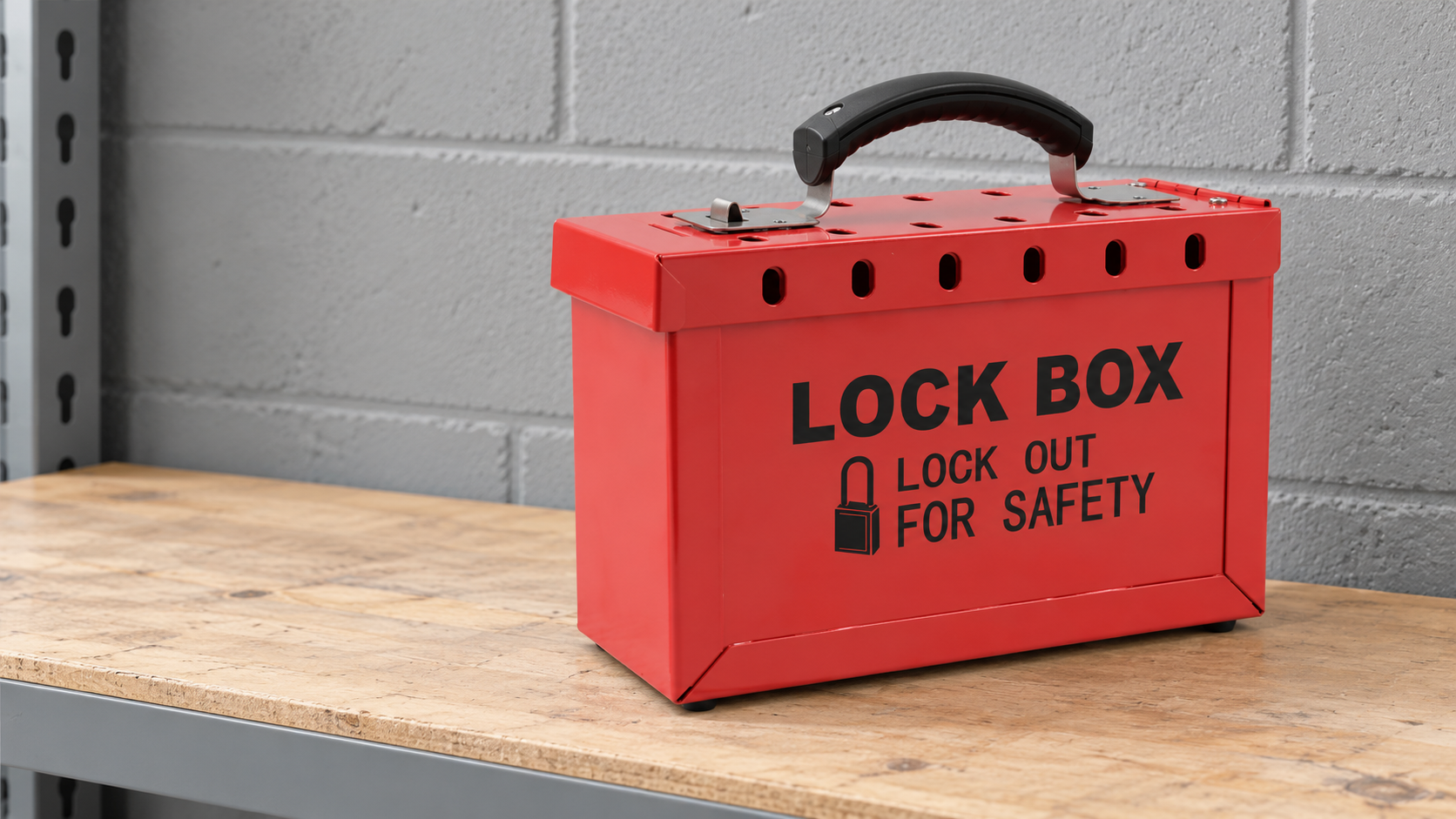
| Lockout station | Organizes devices for access, issue, and replenishment | Storage capacity does not prove that each machine has the correct devices |
Match specifications to the factors that drive lifetime cost.
| Selection dimension | Evidence to request | Cost consequence |
|---|---|---|
| Exposure to oil, chemicals, cold, heat, or moisture | Material compatibility, temperature range, and marking durability | Unreadable tags and degraded devices require replacement |
| Isolation-point geometry | Breaker type, attachment dimensions, shackle clearance, and fit confirmation | Incorrect fit creates unused inventory and delays |
| Employee and contractor identification | Legible names, warnings, language, and key-management requirements | Ambiguous ownership complicates handovers and removal controls |
| Number of workers and isolation points | Device inventory and a defined group-lockout method | Missing devices interrupt planned servicing |
Compare purchase price with replacement frequency, administration, training, and time lost obtaining compatible equipment.
OSHA 1910.147 compliance depends on the workplace program and the task.
The binding U.S. requirements are in 29 CFR 1910.147, subject to its scope and applicable jurisdiction. OSHA-approved State Plans can impose additional or different requirements that must be at least as effective as federal OSHA. Construction, maritime work, and certain electrical exposures have separate provisions; verify the relevant rules before adopting a procedure.
An environmental test or material specification establishes a property, not certification of an employer’s program. Unsupported “OSHA compliant” claims can leave training, fit, or procedures unaddressed.
Select products after defining the isolation procedure.
- Map all energy sources, stored-energy hazards, and isolating points before specifying hardware.
- Confirm lock and device fit against installed isolation points.
- Define who applies devices, who verifies isolation, and how shift changes are controlled.
- Specify legible warnings and employee identification, then request evidence for the tag and attachment’s actual service conditions.
- Size a safety-padlock lockout station around the required device inventory and replenishment process.
QD LOTO offers customizable PVC lockout tags measuring 146 × 75 × 0.5 mm, with erasable-pen use, name, department, and estimated-completion fields, plus front/back multilingual customization. Request oil-compatibility evidence, a low-temperature rating, and attachment specifications for the selected tag.
OSHA 1910.147 answers common questions about locks, tags, and work steps.
Is lock out tag out required by OSHA?
Yes, when servicing or maintenance falls within the standard’s scope and hazardous energy could injure employees. Lockout is required for lockable isolating devices unless the employer demonstrates qualifying tagout protection; assess exclusions and exceptions against the actual task.
What are the OSHA requirements for lockout locks?
They must be durable, standardized within the facility, substantial enough to prevent removal without excessive force or unusual techniques, and identify the applying employee. Energy-control devices must be used only for that purpose; OSHA does not prescribe one universal padlock color or brand.
What must lockout tags have?
Tags must identify the employee applying them and warn against hazardous operation, using a suitable legend such as “Do Not Operate.” They and their attachments must meet the standard’s durability, standardization, substantiality, and identification requirements; the tag attachment has a minimum unlocking strength of 50 pounds.
What are the OSHA steps for lockout and tagout?
The 6 application stages are preparation, shutdown, isolation, lockout/tagout device application, stored-energy control, and verification of isolation. Follow the machine-specific procedure; before restoring energy, apply the separate release checks and employee-notification requirements in 1910.147(e).
These references explain OSHA 1910.147.
- U.S. Government Publishing Office: 29 CFR 1910.147, 2025 edition — regulatory text; confirm current applicable requirements.
- CCOHS: Lockout/Tag Out — Canadian explanatory guidance.
- UK HSE: Providing and using work equipment safely — UK work-equipment safety context.
A clear warning supports isolation; verified energy control protects the person doing the work.
When sourcing lockout tags, contact QD LOTO with your procedure, required warning text, employee-identification method, and environmental conditions to confirm a suitable product and documented specifications.