
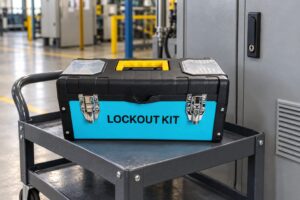
How do Loto Locks fit a Lockout Tagout Kit?
A kit works only when each lock fits the site’s energy-isolating devices and follows the written procedure. OSHA’s control of hazardous energy guidance reinforces that hardware must sit inside a documented lockout program. List breaker handles, disconnects, valves, plugs, hasps, and lockboxes. Record hole diameter, clearance, operating direction, depth, and group-worker count.
For personal control, Loto Locks should be identifiable, assigned, and removable only through the authorized process. For group work, compare hasp or lockbox capacity with exposed workers; a six-hole hasp is not automatically a six-person policy. The non-conductive nylon padlock is a relevant reference when material selection matters.
Which compatibility checks matter before buying a Lockout Tagout Kit?
Before buying a Lockout Tagout Kit, freeze these compatibility requirements in the purchase specification.
Key retention and identification
Specify whether the key remains captive while the shackle is open, and define how keys are controlled or issued. Retention can support a worker-held-key procedure, but does not replace verification or documented removal. Confirm the keyway and spare-key policy.
Body, shackle, and environment
Match body and shackle material to moisture, chemicals, dust, temperature, and electrical proximity. Non-conductive does not mean suitable for every energized task or act as an insulating barrier. Check body width, shackle diameter, usable height, and device hole size together.
| Choice | Best fit | Compatibility check | Procurement risk |
|---|---|---|---|
| Personal keyed padlock | One worker per isolation | Hole diameter, clearance, key behavior | Borrowed keys or unclear ownership |
| Group hasp plus personal locks | Several workers on one isolation | Hasp hole count, shackle diameter, space | Not enough positions or poor alignment |
| Lockbox arrangement | Multi-point isolation | Capacity, visibility, key custody | Process is larger than the kit |
| Mixed kit | Electrical and mechanical devices | Every device on a sample asset | Unused pieces or missing adapters |
How should lock and kit dimensions be specified?
Use an application matrix rather than a generic “standard size.” This checklist is not a universal product limit; obtain the supplier drawing and validate the equipment.
| Application | Measure on site | Lock or accessory decision |
|---|---|---|
| Breaker handle | Handle width, hole position, adjacent clearance | Breaker lockout style and usable shackle height |
| Disconnect or isolator | Locking hole diameter and enclosure depth | Body width, shackle diameter, and hasp alignment |
| Multi-worker isolation | Number of workers and available attachment points | Hasp or lockbox capacity plus one personal lock per worker |
| Mobile maintenance | Device count, carrying space, water or dust | Compartmented case or bag and replenishment list |
Keep the matrix with the purchase specification. A Lockout Tagout Kit with more devices can still be wrong if locks, tags, or hasps do not match. A long steel shackle padlock suits isolation points that need extra reach while still requiring measured clearance.
What standards and evidence should buyers request?
The federal text of 29 CFR 1910.147 addresses hazardous-energy control and should be read as a program requirement, not a product approval mark. These sources describe practice; they do not certify a kit.
Request a dimension drawing, material description, keying details, care instructions, and product evidence. State destination market and task in the purchase order. Avoid unsupported certification, voltage, or chemical-resistance claims.
How to standardize a compatible kit
Standardize Loto Locks only after the sample fit, key-control workflow, and identification convention have passed a user check.
- Survey representative isolation points and save photographs with measured dimensions.
- Define personal ownership, key retention, color or numbering, and group-work capacity.
- Build a small sample kit and perform an application test with the authorized users.
- Record replenishment items, inspection frequency, and the evidence required at receipt.
For a fixed maintenance area, a combined wall-mounted lockout station can keep approved locks, tags, and devices visible at the point of use. QD LOTO can help buyers compare configurable hardware against a device list. The practical choice is the kit that can be applied, identified, and accounted for at every isolation point—not the longest component list.
Frequently Asked Questions
What is a LOTO lock?
A LOTO lock is a personal safety padlock used to secure an energy-isolating device during authorized servicing. Its color, identification, key control, and dimensions should follow the procedure; the lock alone does not make equipment safe.
What is a Lockout Tagout kit?
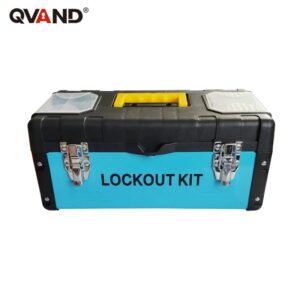
It is a grouped set of locks, tags, hasps, device-specific lockouts, and carrying or storage items for a defined energy-control process. Contents depend on the equipment survey and the workers who must apply personal control.
What is normally included in a LOTO kit?
Common contents include safety padlocks, danger tags, hasps, breaker or valve lockouts, and a bag, case, or station. Verify each item against the isolation list; “normally included” is not a compatibility check.
Why are LOTO padlocks often key-retaining?
Key retention helps prevent a worker from leaving a lock installed while carrying the key elsewhere. Confirm the exact behavior in the product specification and align it with the removal procedure.
Why are LOTO locks often non-conductive?
Non-conductive materials can reduce a conductive path if a lock contacts electrical hardware, but they do not replace de-energization, isolation, or verification. The CCOHS lockout guidance also treats lockout as a controlled procedure, not a material claim. Select material from the risk assessment and documentation, not the label alone.
References
- OSHA 29 CFR 1910.147 – The control of hazardous energy
- OSHA Control of Hazardous Energy
- eCFR 29 CFR 1910.147
- CCOHS Lockout/Tagout Guidance
Choose by measured fit, controlled ownership, and documented use; compatibility is the safety feature that makes every other component useful. For the complete product route, review the lockout toolbox kit combination and contact QD LOTO with your device dimensions and required quantities.