
Lockout Safety: OSHA Compliant Tags
When a maintenance manager in Ningbo encountered a pump isolation problem, Daniel Wu told his team to tag the motor starter before replacing a bearing. Ten minutes later, condensation softened the tag face, the warning smeared, and a second technician could not see who controlled the isolation. The review reversed the first assumption: the padlock had held. The failure was a procedure and specification gap.
Summary: OSHA-compliant tagging is durable identification, clear hazardous-energy warning language, secure attachment, and traceable responsibility under 29 CFR 1910.147. Lockout Safety programs should specify material, print method, attachment strength, employee fields, and replacement rules before procurement. Buyers should qualify tags with locks, hasps, and stations, then document when tagout alone is allowed and when a lock is mandatory.
Lockout Safety starts with the tag specification
A tag used for hazardous-energy control must communicate during real maintenance, not only in a purchasing sample. Oil mist, cleaners, sunlight, and gloved handling can reduce legibility. In a compliant Lockout Safety program, the tag should remain readable and identify the employee, date, equipment, and isolation reason.
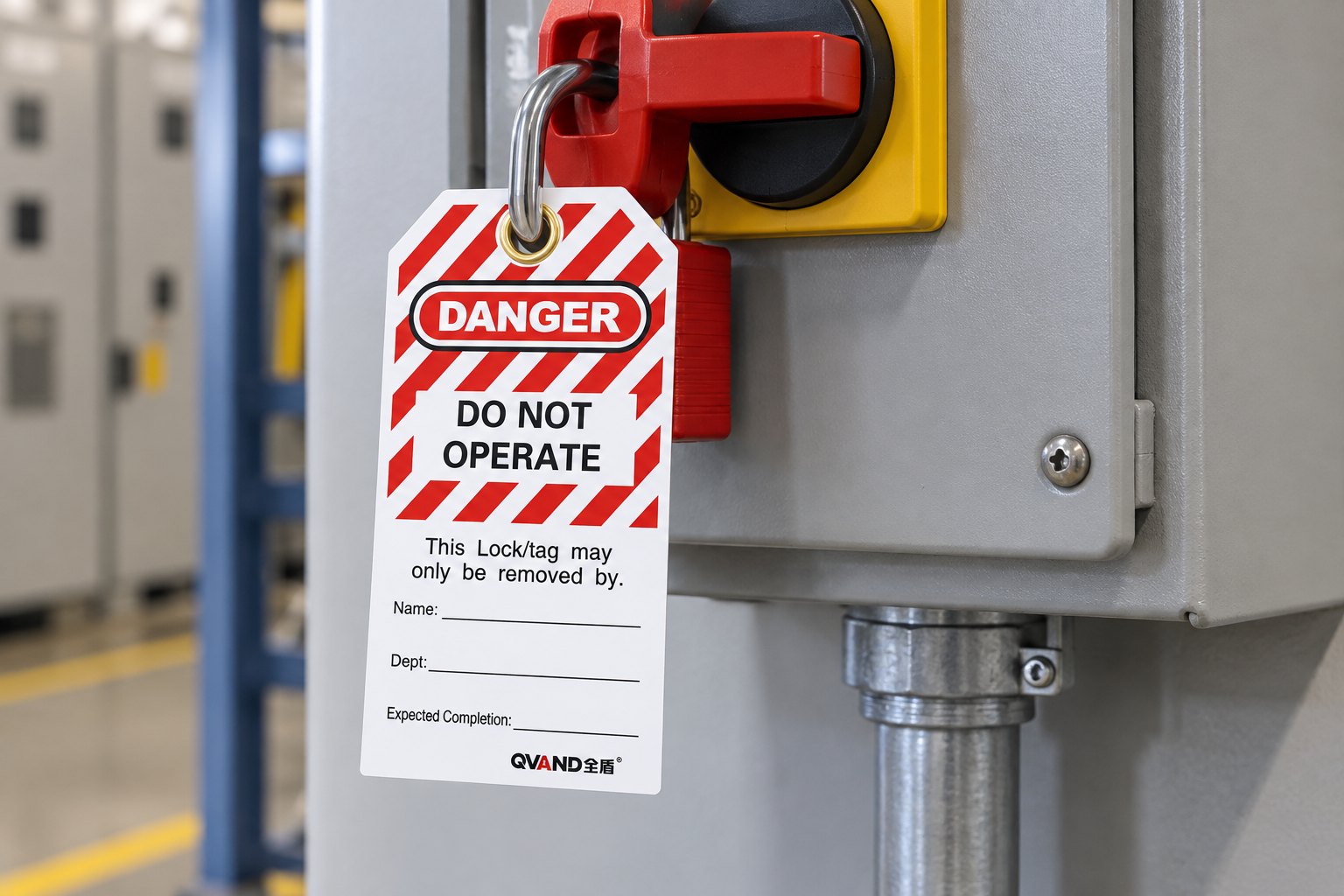
OSHA 29 CFR 1910.147 requires devices to be standardized, substantial, identifiable, and used only for energy control. That makes the tag a procedure device, not a generic label. ANSI Z244.1 and ISO 45001 can support management-system context, but they do not make a product OSHA-certified.
| Specification point | Weak choice | Controlled choice | Impact |
|---|---|---|---|
| Warning message | Small generic wording | Bold danger wording with name and date fields | Clearer shift handover |
| Material | Paper or thin card in wet areas | PVC or equivalent durable substrate | Lower replacement risk |
| Print durability | Ink that wipes off under solvents | Print qualified for the exposure | Legibility survives the job |
| Attachment | Loose string or clip | Secure tie point used with an energy-control device | Less accidental removal |
How safety lockout tags fit OSHA 29 CFR 1910.147
Under OSHA’s hazardous-energy rule, a tagout device is a warning device, not the same physical restraint as a lock. When a machine can accept a lock, tag-only control is normally weaker and needs equivalent protection if used in place of locking.
For procurement, safety lockout tags should be specified with the locking method. A tag attached to a non-conductive nylon padlock identifies the authorized employee while the lock prevents operation. Where multiple workers isolate the same source, an industrial padlock hasp lets each person keep individual control.
OSHA also expects devices to be durable and substantial enough to avoid accidental removal. Buyers should confirm dimensions, reinforced holes, stable print, and contrast. Storing approved devices in a wall-mounted LOTO station reduces variation.
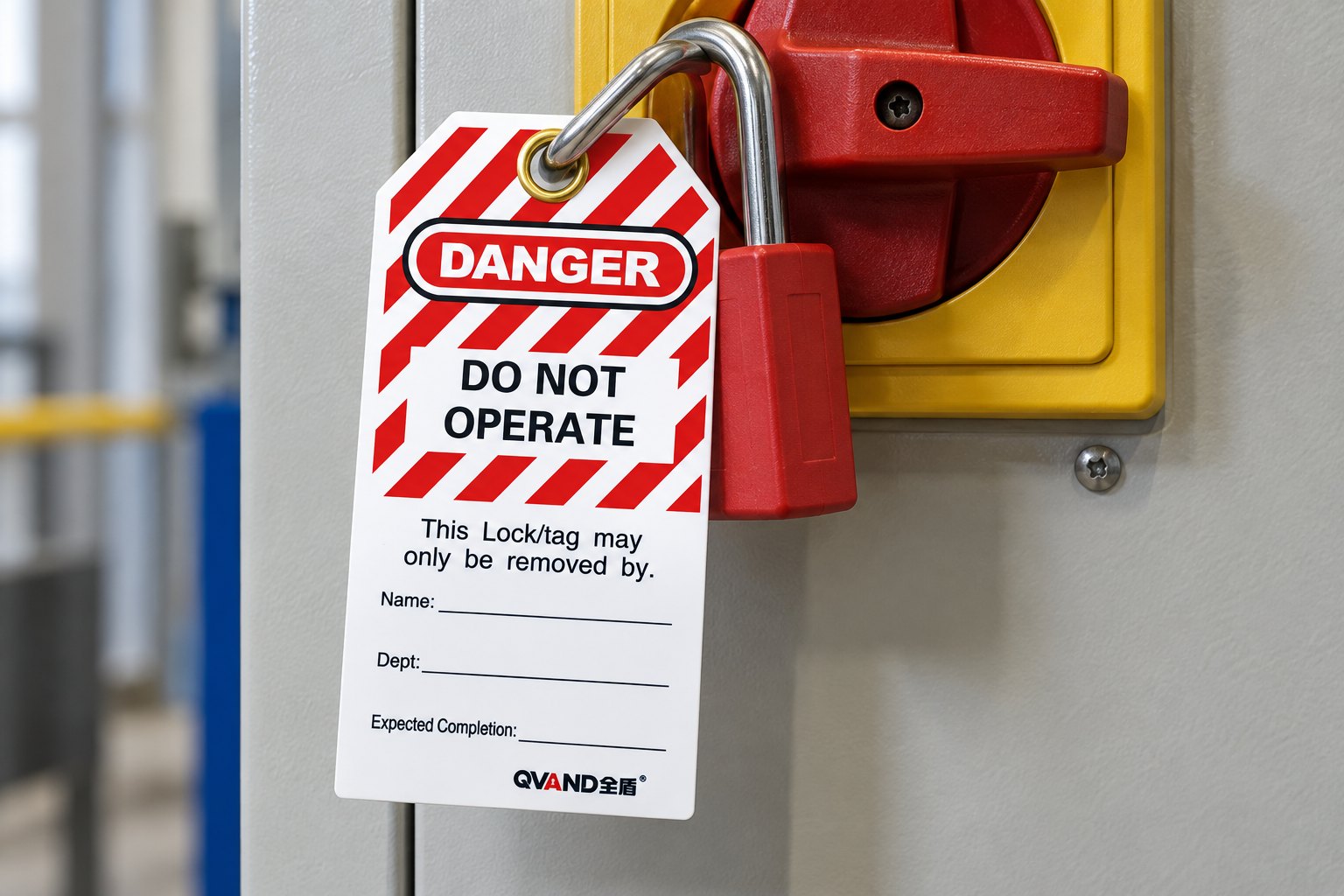
Selection matrix for safety lockout visibility and durability
Many plants buy tags by unit price, then pay again through replacements, unclear isolation records, and audit findings. Define the environment first: dry panels, wet pumps, outdoor valves, and mobile equipment place different stress on the tag surface and attachment point.
The matrix below is a procurement screen for safety lockout specification. It is not a certification table; it aligns the device with procedure, exposure, and destination market.
| Use condition | Tag feature | Dimension to confirm | Risk if ignored |
|---|---|---|---|
| Wet process area | PVC substrate and water-resistant print | Thickness, hole reinforcement, writable field | Smearing during cleaning |
| Outdoor valves | UV-stable color and strong tie hole | Exposure period and inspection interval | Faded warning |
| Electrical cabinet | High-contrast warning and employee ID field | Padlock shackle clearance and tag size | Crowded devices hide the warning |
| Contractor maintenance | Multilingual or custom department fields | Language, logo, numbering, approval mark | Ambiguous responsibility |
For international sourcing, ask suppliers to separate what is tested, documented, and merely marketed. A supplier can provide drawings, material data, print samples, and packaging controls; it should not imply OSHA certification for a tag.
Practical procurement controls for safety lockout tags
Start by mapping the energy-control procedure. Which equipment is isolated, who signs the tag, where is it attached, how long does it remain in place, and who removes it? These answers define the tag better than a catalog photo.
Second, approve samples before volume ordering. Check ink drying, tear resistance, and arm’s-length readability under normal plant lighting. In a mature Lockout Safety system, purchasing, EHS, and maintenance should approve the same sample.
Third, define replacement rules. A tag with a damaged hole, unreadable name, missing date, or oil-covered warning should be removed from service. This is where safety lockout tags become part of discipline.
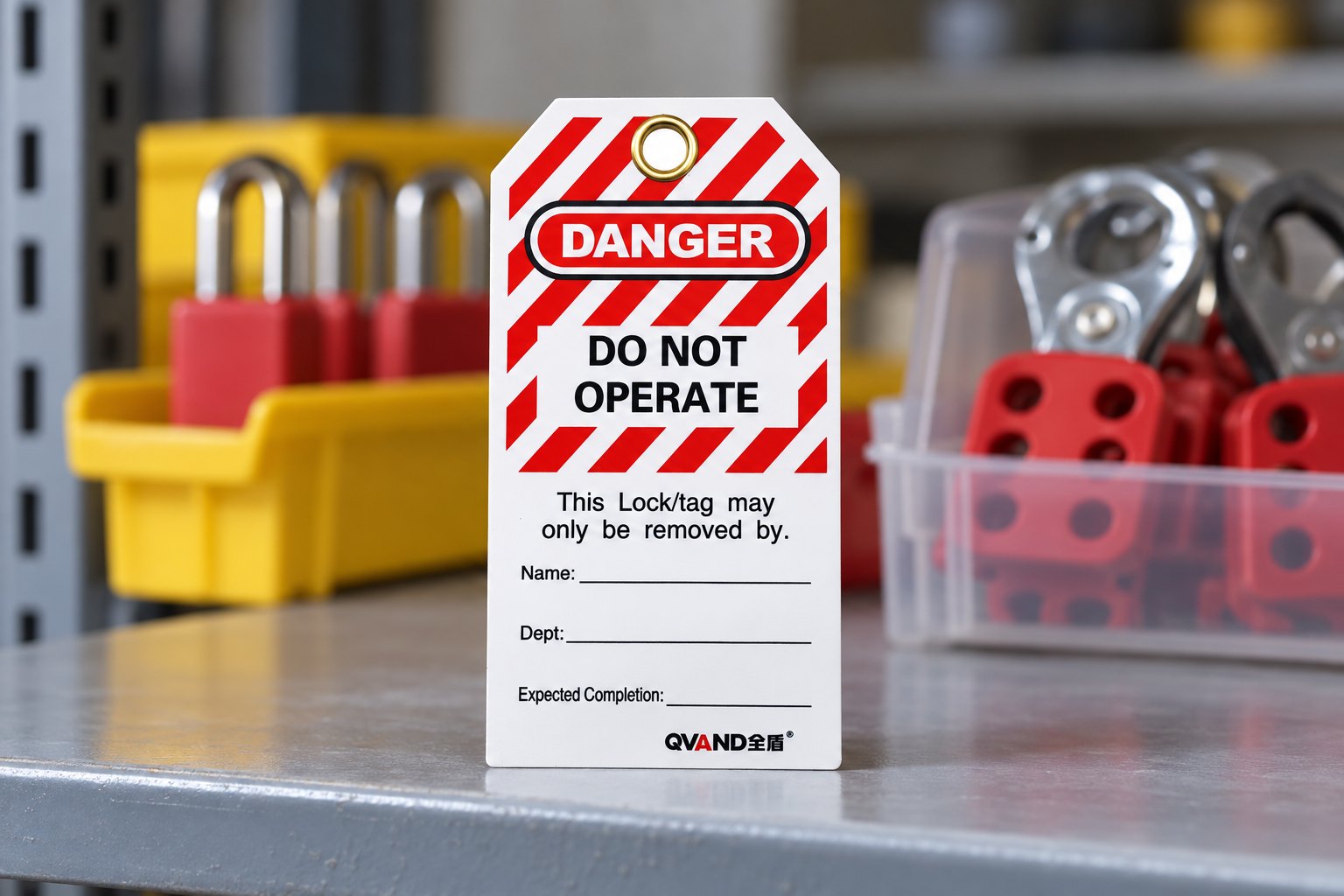
QD LOTO supports industrial buyers with custom PVC lockout tags for equipment isolation programs, distributor stock, and plant standardization projects. The tag should be considered with the padlock, hasp, station, and written procedure as one system, not as a standalone consumable.
FAQ on compliant tag use
What are the 7 steps of a lockout/tag out procedure?
A common sequence is preparation, shutdown, isolation, lockout or tagout application, release of stored energy, verification of zero energy, and controlled restart after devices are removed. Site procedures may divide these steps differently, but verification before work begins is the critical control.
What is an OSHA requirement for lockout tag out devices?
OSHA requires energy-control devices to be durable, standardized, substantial, identifiable, and used only for hazardous energy control. For tagout devices, the warning must be clear and the attachment method must resist accidental removal under expected workplace conditions.
What are lockout tagout tags?
They are warning devices attached during hazardous-energy control to show that equipment must not be operated until an authorized person removes the device. They normally include danger wording, employee identity, date, department, equipment reference, or a custom instruction field.
How much does a lockout tag cost?
The price depends on material, thickness, size, print method, language, customization, packaging, and order quantity. For B2B procurement, total cost matters more than unit price because a weak tag can create replacements, downtime, and audit findings.
References and closing principle
The principle is simple: a tag is compliant only when it still communicates clearly at the moment someone is tempted to restart the machine. For custom PVC warning tags matched to plant procedures, distributor programs, and equipment isolation points, review QD LOTO’s Custom PVC Lockout Tag and contact the team with target material, size, language, and packaging requirements for safety lockout sourcing.