
Keeping the workplace safe is essential, especially when servicing machinery and equipment that may unexpectedly release hazardous energy. Safety lockout procedures help protect workers by preventing equipment from being accidentally started during maintenance or repair. This guide contains all the information that you might need to know about safety lockout, including its meaning, reasons why it is important, and types of devices.
What Is Safety Lockout?
Safety lockout is the process of isolating hazardous energy and securing equipment to prevent accidental startup during maintenance or servicing. By locking energy isolation devices, authorized workers can safely perform maintenance without the risk of unexpected machine operation. Safety lockout systems typically include padlocks, tags, hasps, and other lockout/tagout (LOTO) devices that work together to ensure workplace safety.
Why Is Safety Lockout Important?
Implementing effective safety lockout procedures is vital for several reasons:
1. Protecting Workers
Safety lockout significantly reduces the risk of workplace injuries and fatalities by ensuring equipment remains de-energized throughout maintenance activities.
2. Regulatory Compliance
Safety regulations, including OSHA’s Lockout/Tagout Standard, require employers to establish and follow proper LOTO procedures to protect employees from hazardous energy.
3. Preventing Costly Accidents
Proper lockout/tagout practices help prevent equipment damage, reduce operational downtime, avoid workplace accidents, and minimize legal and financial risks.
What Is Safety Lockout Tagout (LOTO)?
Safety lockout tagout (LOTO) is a standardized safety procedure used to control hazardous energy during equipment maintenance. It consists of two essential elements:
- Lockout, which physically isolates hazardous energy by securing energy isolation devices with locks.
- Tagout, which uses warning tags to indicate that equipment must not be operated until maintenance has been completed and the lockout device has been removed.
Together, lockout and tagout provide an effective system for protecting workers from unexpected equipment startup.
What Are the Main Safety Lockout Devices?
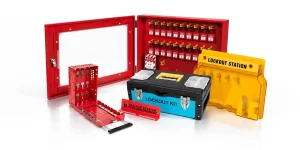
A complete safety lockout system includes several specialized devices designed for different applications.
Safety Lockout Padlocks
Safety lockout padlocks prevent unauthorized operation of machinery or equipment during maintenance. They are typically color-coded and keyed individually, making it easy to identify the authorized employee responsible for each lock.
Safety Lockout Hasps
Safety lockout hasps allow multiple authorized workers to lock out the same energy source simultaneously. Each worker applies their own padlock to the hasp, ensuring the equipment cannot be restarted until every lock has been removed.
Safety Lockout Tags
Safety lockout tags provide a clear visual warning that equipment is under maintenance. They typically display important information such as the authorized employee’s name, maintenance details, and the reason for the lockout.
Safety Lockout Keys
Each safety lockout key is uniquely matched to its corresponding padlock. Only the authorized employee who installed the lock should have access to the key, ensuring that equipment cannot be restarted until maintenance has been safely completed.
How Does a Safety Lockout Hasp Work?
A safety lockout hasp enables multiple workers to secure a single energy isolation point using their own padlocks. During maintenance, the hasp is attached to the energy isolation device, and each authorized worker installs their personal safety padlock on the hasp. The equipment cannot be re-energized until every padlock has been removed, ensuring that all maintenance personnel have safely completed their work before the machine is restarted.
What Is a Safety Lockout Key?
A safety lockout key is the dedicated key for a safety padlock. It is controlled by the authorized employee who installed the lock and should never be shared with others. This ensures that only the person performing the maintenance can remove the lock and restore equipment to operation, providing maximum protection against accidental startup.
How to Choose the Right Safety Lockout Device?
Selecting the right safety lockout device depends on the type of equipment, the energy source, and your workplace requirements. Consider the following factors:
- The type of machinery and hazardous energy involved.
- The number of employees participating in the lockout procedure.
- Compatibility with your equipment’s energy isolation points.
- Employee training and familiarity with LOTO procedures.
- Compliance with OSHA and other applicable safety regulations.
Safety Lockout FAQs
Q: What other benefits of implementing safety lockout procedures?
A: In addition to protecting workers, proper safety lockout procedures help reduce equipment damage, minimize downtime, improve productivity, and lower accident-related costs.
Q: Is safety lockout training required?
A: Yes. Employers should provide comprehensive LOTO training to ensure employees understand how to identify hazardous energy, use lockout devices correctly, and follow safe maintenance procedures.
Q: Can safety lockout devices be used on equipment other than machinery?
A: Yes. Safety lockout devices are commonly used on electrical panels, valves, circuit breakers, pneumatic systems, hydraulic systems, and other equipment that contains hazardous energy.
Conclusion
Safety lockout is one of the most effective methods for preventing injuries caused by hazardous energy. By implementing proper lockout/tagout procedures, using high-quality safety lockout devices, and providing regular employee training, organizations can improve workplace safety, maintain regulatory compliance, and reduce the risk of costly accidents. Investing in a reliable LOTO program protects both your employees and your business.