
When a reliability engineer in Rotterdam reviewed hasps for a damp maintenance area, the quotation made aluminum sound like an automatic upgrade. In this illustrative scenario, the sample review revealed a different problem: the chosen jaw did not suit the isolation point. Material choice mattered, but it could not compensate for an unverified closure and padlock arrangement.
Summary: Compare an aluminum lockout hasp with a steel alternative using the service environment, jaw geometry, working closure and personal-padlock clearance. Both are metallic options; aluminum is not electrical insulation. Under 29 CFR 1910.147(c)(5), durability and substantiality must be addressed for the application, not inferred from a material name or coating color.
Compare documented materials without inventing a ranking
Aluminum and steel describe broad material families. Alloy, section thickness, coating, pivot design and surface treatment influence the supplied assembly, so a generic material label cannot establish a corrosion rating or breaking strength. Ask for the actual material and finish description, relevant manufacturer limitations and evidence supporting any quantitative claim.
Mass can matter to handling and the arrangement’s available support, but weigh or obtain documented mass for the models being compared. Do not translate the lower density of a raw material into a guaranteed finished-product weight advantage when designs differ. Similarly, visible red coating does not establish an insulation classification.
| Question | Aluminum design | Steel design |
|---|---|---|
| Electrical insulation? | Do not infer from metal or coating | Do not infer from metal or coating |
| Corrosion suitability? | Verify alloy, finish and exposure | Verify grade, finish and exposure |
| Handling mass? | Use actual model data | Use actual model data |
| Mechanical suitability? | Check geometry and supplier evidence | Check geometry and supplier evidence |
Check the material evidence and the fitted arrangement
Measure or document jaw opening, relevant section dimensions, closure movement and the padlock holes. Then review the actual isolation point. A hasp can be large enough to surround a loop but still be unsuitable if its closure is obstructed, its working orientation is unstable or the padlocks cannot be attached as intended.
The number of visible holes is not necessarily the usable worker capacity. Adjacent padlock bodies can interfere before all holes are occupied. Use the intended personal padlocks during the controlled fit review, and consider access for the next worker rather than checking only the first lock. The existing hasp procurement guide provides broader selection context; this review concentrates on material evidence and interface acceptance.
| Application constraint | Evidence to collect | Purchase decision |
|---|---|---|
| Wet or chemical exposure | Actual substances and supplier limitations | Accept only supported suitability |
| Restricted isolation point | Jaw and closure review | Reject interference or incomplete closure |
| Several personal locks | Trial with intended padlock bodies | Document usable arrangement |
| Electrical task | Task rules and complete design evidence | Do not treat metal as insulating |
Preserve individual control within the group procedure
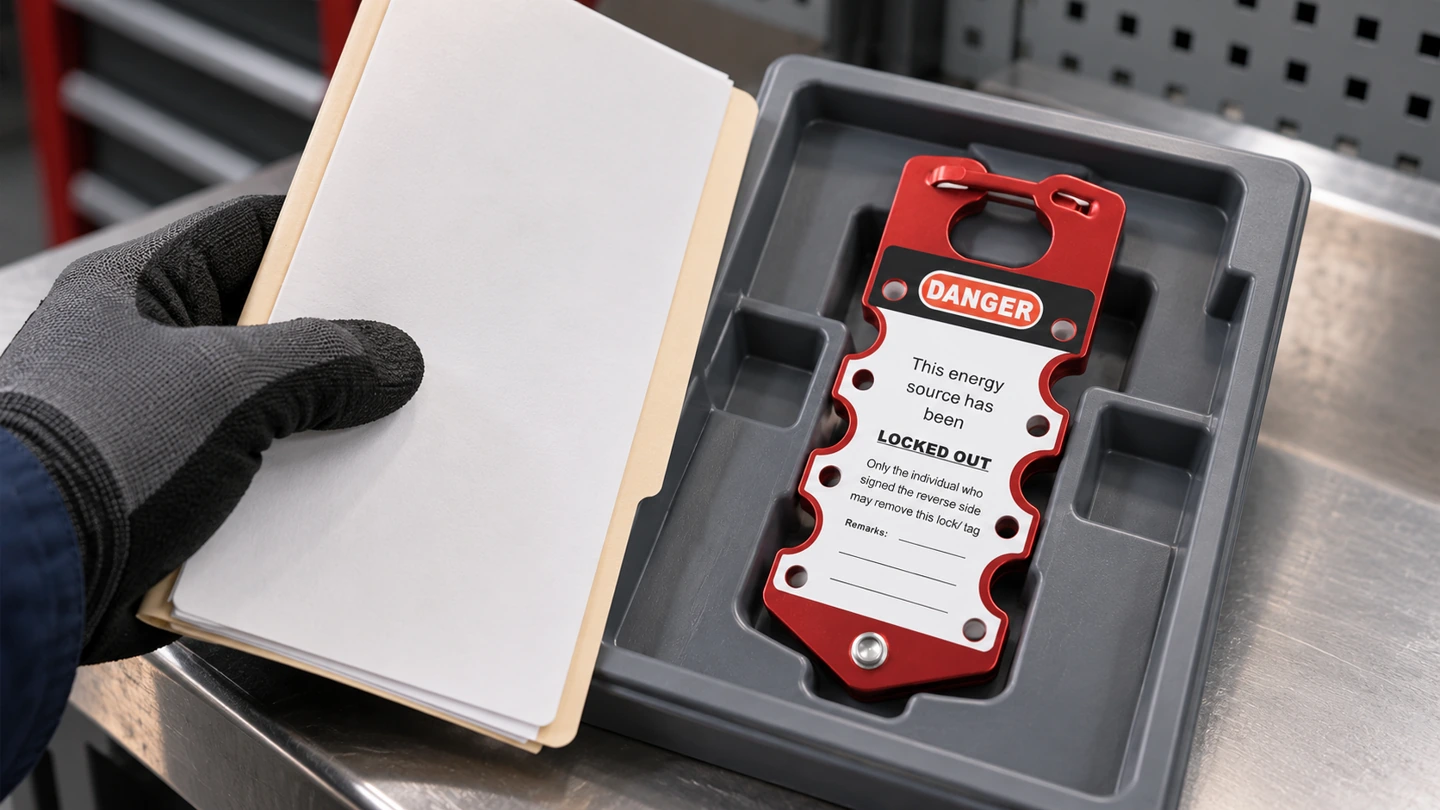
29 CFR 1910.147(f)(3) requires group procedures that afford protection equivalent to personal lockout or tagout, with defined responsibility and individual participation controls. Material selection does not satisfy those procedural requirements. If the job cannot be managed sensibly at one hasp, review an approved group lockbox arrangement rather than improvising extra layers of hardware.
The hardware obligations in paragraph (c)(5) and the employer’s procedure remain separate evidence questions. Manufacturer claims should identify the tested model and conditions; OSHA does not certify a hasp merely because it is sold for LOTO. For an electrical task, the separate requirements in 1910.333 may also apply. The energy-source device overview explains why one accessory cannot address every hazard.
Approve a material and a complete arrangement
Collect the exposure description, compare supplier material and finish evidence, trial the actual jaw and closure, and document practical personal-padlock capacity. Keep the approved configuration with the purchasing record and review substitutions. QVAND hasp options should be assessed with the same evidence standard. Total cost includes replacement availability, inspections and rejected incompatible deliveries; without matched quotations and service data, a universal aluminum-versus-steel cost winner cannot be stated.
Frequently asked questions
When should aluminum and steel lockout hasps be compared?
Compare them when the application presents handling, corrosion, geometry or sourcing questions. Use matched models and the actual exposure rather than assuming the material alone determines suitability.
Does an aluminum hasp provide electrical insulation?
No. Aluminum is a conductive metal, and a coating does not by itself establish an electrically insulating assembly. Select an appropriate design using the task assessment and model-specific evidence.
Which environmental and fitting requirements matter more than material name alone?
Check chemical or wet exposure, temperature limitations, jaw geometry, closure, padlock access and maintenance space. Require evidence for claims that influence acceptance.
What is the purpose of a lockout hasp?
A hasp allows several personal locks to secure an appropriate isolation point within the approved procedure. The arrangement must remain effective with the intended locks fitted.
How can padlock body size limit usable hasp capacity?
The lock bodies may obstruct adjacent holes or prevent access even when each shackle fits individually. Trial the combination and document the workable configuration.
How do steel and aluminum hasps differ from nonconductive designs?
Steel and aluminum are metallic options. A nonconductive design uses different construction, but any electrical-suitability claim still needs evidence for the complete product and intended use.
Which wear or corrosion defects should be checked before use?
Look for deformation, pitting, damaged finishes, cracks, loose pivots, incomplete closure and worn padlock holes. A doubtful device should be segregated for review rather than accepted solely because it still closes.
References
- 29 CFR 1910.147 — Control of hazardous energy
- CCOHS — Lockout/Tag out
- CCOHS — Hazardous Energy Control Programs
- 29 CFR 1910.333 — Electrical work practices
The useful comparison is between supported assemblies in a real application, not between two material names.
Compare the relevant QVAND product options against your documented application, and contact the team with the actual equipment details, photographs and evidence requirements.