
When two maintenance crews in Antwerp prepared a shared shutdown, each had a task list but neither had been assigned overall lockout coordination. This illustrative planning scenario was not solved by adding a larger red box. The missing element was a controlled relationship between the verified isolation, secured keys, individual workers and the changing work schedule.
Summary: Plan LOTO group lock boxes as part of a documented group procedure. 29 CFR 1910.147(f)(3) requires equivalent individual protection, defined responsibilities and coordination of multiple crews. Confirm isolation-key custody, personal-device access and shift continuity before work; a lockbox’s hole count or an Oshalock search label is not evidence of a complete compliant system.
Assign isolation and coordination responsibilities before the job
The procedure should identify who establishes the isolation, how its effectiveness is verified, which keys are secured and who coordinates affected workforces. The coordinator also needs a way to determine each participant’s exposure status. A department name written on the box is not enough to define those duties.
Where contractors join the job, the on-site and outside employers must exchange the relevant procedures under 1910.147(f)(2) where applicable. Resolve interfaces before work begins: task boundaries, participation, communication and return-to-service authority. A shared meeting can align those arrangements but cannot replace the actual isolation and verification.
| Planning role | Question to resolve | Record |
|---|---|---|
| Isolation lead | Who establishes and verifies the required controls? | Approved procedure and isolation record |
| Overall coordinator | Who coordinates more than one crew? | Named responsibility and communication route |
| Participating worker | How is individual protection established? | Personal-device participation process |
| Release authority | How is work completion confirmed? | Controlled return-to-service sequence |
Design continuity for workers joining, leaving and handing over
A group box can retain keys to equipment locks while participating workers apply their personal devices to the approved group mechanism. The particular arrangement must prevent access contrary to the procedure and preserve each worker’s protection. Do not infer that any box with a lid can perform that function.
Assess usable capacity with the intended personal-padlock bodies, attachment positions and access. Crews can overlap during handover, so a static headcount may understate the practical requirement. The shift-handover guide discusses continuity, and the hasp procurement guide explains why attachment-hole count alone can overstate usable access.
| Job event | Continuity question | Planning response |
|---|---|---|
| Worker joins | How is protection established before exposure? | Use the approved personal participation step |
| Worker leaves | How is status communicated and recorded? | Follow individual release requirements |
| Shift overlap | Is there room and time for the transfer? | Plan practical attachment access |
| Job scope expands | Does the isolation still cover the task? | Reassess before extending the work |
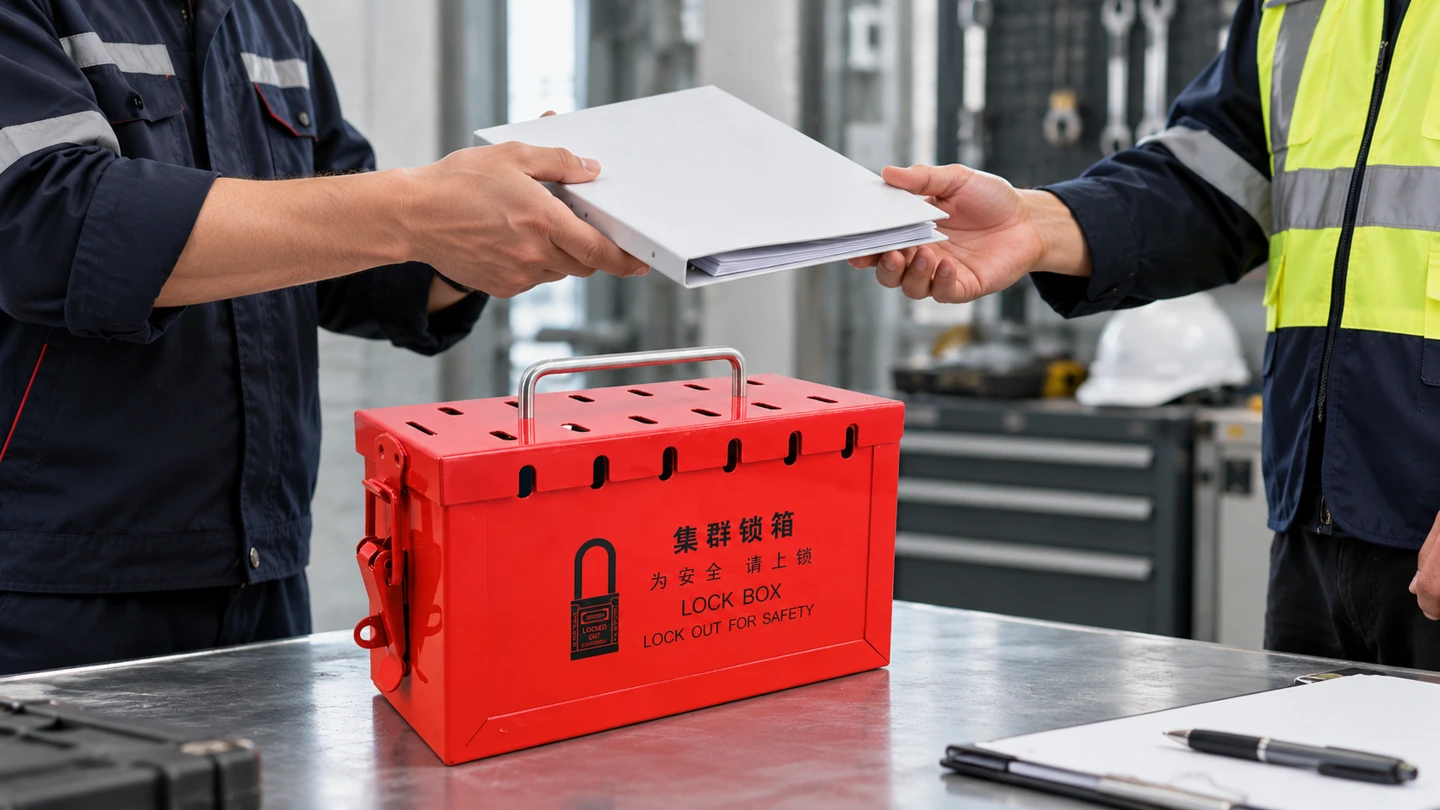
Do not let convenient keys override individual protection
29 CFR 1910.147(f)(3)(ii) includes primary responsibility, member exposure status, multi-crew coordination and personal-device attachment/removal requirements. Paragraph (f)(4) requires specific procedures for continuity during shift or personnel changes. A supervisor’s key or an informal attendance list cannot silently replace these controls.
Normal device removal belongs to the employee who applied it. If that employee is unavailable, paragraph (e)(3)’s documented employer-directed exception has specific safeguards, including absence verification, reasonable contact efforts and ensuring the employee knows before resuming work. The word OSHA in a product enquiry does not identify a lockbox product certification.
Approve the box together with its operating arrangement
Confirm the key-retention function and instructed use, trial practical personal-device capacity, assign the coordinator and document joining, leaving and handover controls. QVAND group lockbox options can be reviewed against that specification without treating advertised capacity as a procedure approval. Include the cost of access constraints, communication and spare approved equipment in the sourcing comparison. Any assumptions about crew overlap should be documented as planning assumptions, not presented as regulatory quantities.
Frequently asked questions
What should be planned before several crews use one group lockout box?
Define the isolation scope, verification, coordinator, key custody, individual participation and release process. Review contractor and shift interfaces before deciding whether the proposed box arrangement is suitable.
How should responsibility be assigned across different departments?
Assign overall job-associated coordination to the designated authorized employee under the applicable group procedure. Each crew must understand its own responsibility and the common communication route.
Which records help maintain continuity when workers join or leave the job?
Maintain the approved isolation record, participant status and controlled handover information. Records support the process but do not replace each worker’s required personal protection.
How to use group LOTO box?
Follow the employer’s group procedure and the specific box instructions. The verified equipment-isolation keys and individual devices must be managed so protection remains effective throughout participation.
What advantages does a lock box provide during a group lockout?
A suitable box can help organize key control across several isolation points and workers. Its value depends on an approved arrangement, adequate practical access and effective coordination.
Why does each participating worker need individual protection?
Group procedures must afford protection equivalent to personal lockout or tagout. Individual participation prevents protection from depending only on another person’s informal assurance.
How should personal-padlock capacity be matched to the maintenance crew?
Trial the actual padlock bodies and attachment access, including credible handover overlap. Advertised holes or nominal capacity do not alone prove a workable configuration.
References
- 29 CFR 1910.147 — Control of hazardous energy
- CCOHS — Lockout/Tag out
- CCOHS — Hazardous Energy Control Programs
The box supports the process; individual protection must remain visible in the process.
Compare the relevant QVAND product options against your documented application, and contact the team with the actual equipment details, photographs and evidence requirements.