
When a departmental planner in Coventry expanded a LOTO board, the extra hooks did not prevent the next shortage of approved tags and breaker devices. In this illustrative scenario, capacity had been measured as wall space rather than supported jobs. The useful change was an inventory tied to equipment, overlapping work and a clear restocking trigger.
Summary: Size a lockout station LOTO inventory from the department’s isolation points and authorized-worker arrangements. Separate reusable hardware from consumables and define who replenishes each item. 29 CFR 1910.147(c)(5) requires the employer to provide suitable hardware, but it does not specify one universal lock count or station size for every department.
Build the inventory from equipment and simultaneous work
Start with the machines and tasks covered by the department’s procedures. Record the required device models, the number of isolation points on each task and the approved personal-lock or group arrangement. Review concurrent work, remote jobs and contractor interfaces; do not assume every employee needs the same kit.
Distinguish physical storage positions from usable stock and from locks allocated personally. A hook can hold a limited set of actual items, while bulky accessories or tags may need different storage. Retain supplier dimensions and trial the proposed layout if capacity matters to the purchase. Piece count alone cannot establish coverage.
| Inventory group | Basis for planning | Record |
|---|---|---|
| Personal locks | Authorized workers and approved allocation | Employee issue register |
| Shared accessories | Isolation-point device mapping | Approved model list |
| Consumables | Actual tags and attachment usage | Reorder trigger and lead time |
| Portable equipment | Jobs away from fixed storage | Kit checklist and return review |
Use a replenishment trigger for every controlled item
Define what happens when an item is issued, returned damaged, missing or consumed. The issue owner should know whether a shortage is temporary work allocation or a purchase requirement. An inspection tray for suspect returns prevents a quick restock from putting doubtful hardware back among ready supplies.
Set stock thresholds from local demand and delivery information, not a generic percentage. As an illustrative planning exercise, compare expected overlap of jobs with the approved device quantity per job, then add any locally justified reserve. This is a planning method, not an OSHA formula. Review the device-family overview alongside the personal-lock allocation guidance when separating shared stock from worker ownership.
| Inventory event | Immediate question | Owner action |
|---|---|---|
| Device issued | Which job holds it? | Record assignment |
| Item returned | Is it complete and serviceable? | Inspect before restocking |
| Consumable low | Can it be replenished before demand? | Use the approved reorder route |
| New equipment added | Does approved stock cover the interfaces? | Update inventory and compatibility records |
Keep the stock review connected to the energy control program
29 CFR 1910.147(c)(1) requires an energy control program, not merely supplied hardware. The equipment procedures, training and periodic inspections determine whether workers can use the inventory correctly. Paragraph (c)(6) requires procedure inspections at least annually, which differs from checking a station for missing items.
Where several crews are involved, paragraph (f)(3) sets group-control responsibilities; paragraph (f)(4) addresses continuity during shift or personnel changes. An inventory change must not casually reassign personal keys or remove locks from active protection. Storage access should suit authorized users while preserving the employer’s issue and ownership controls.
Specify the station after defining the inventory process
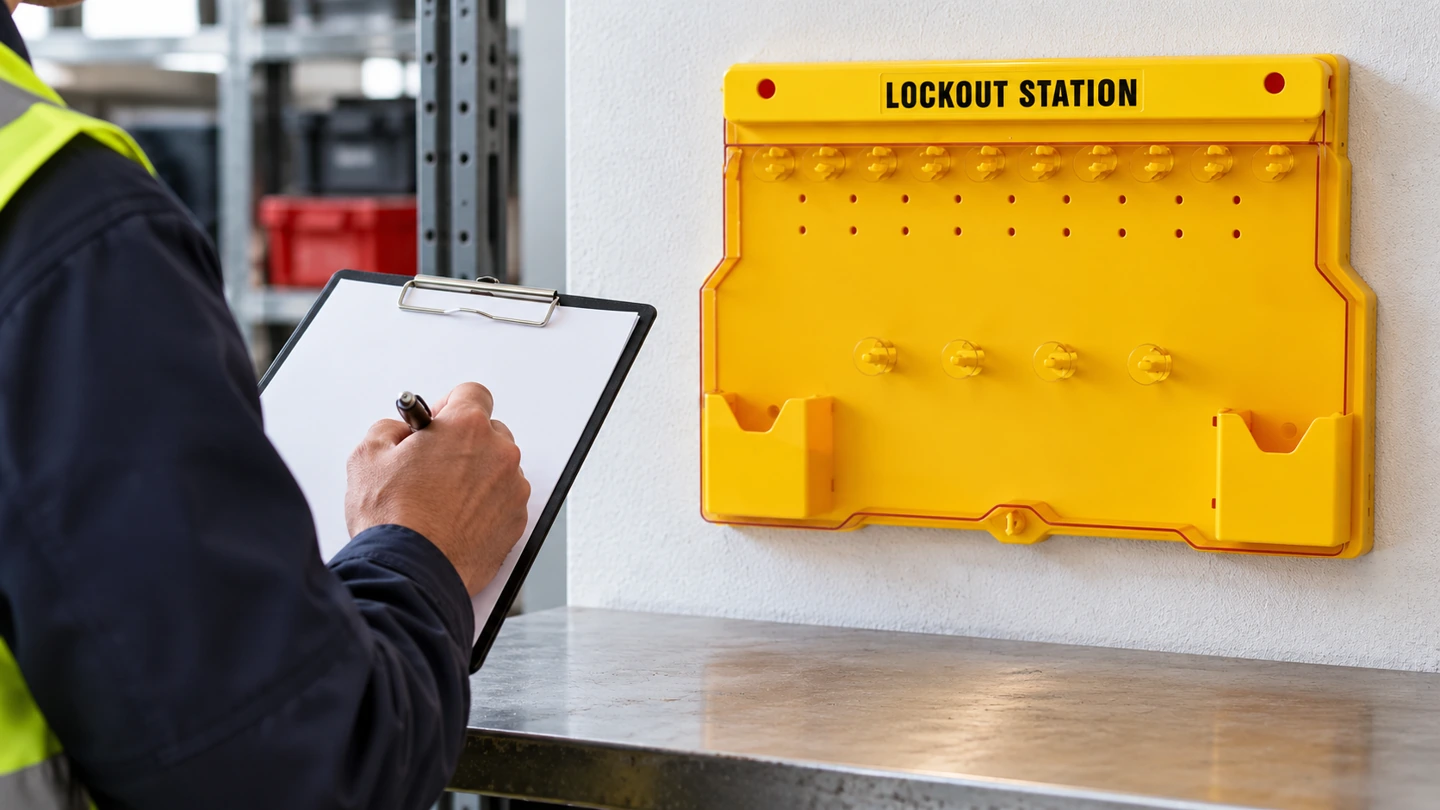
Approve the contents list, anticipated work overlap, practical storage layout and replenishment ownership before choosing a wall board or cabinet. Check mounting, cover movement and the route to remote jobs against the site. QVAND station options can then be compared on actual usable arrangement and documented dimensions. Total cost includes consumed tags, replacement devices, portable kits and stock-handling time; buying the largest board is not a substitute for a controlled inventory.
Frequently asked questions
How should a department size its LOTO station?
Use the actual equipment procedures, device interfaces and likely overlapping jobs. Distinguish personal allocations, shared accessories and consumables before selecting physical storage capacity.
Which items should be visible at the point of issue?
Make item identity, approved use, stock status and replenishment responsibility clear. Visibility should help staff find the right device, without exposing personal keys to uncontrolled access.
How can a simple inventory check identify missing lockout devices?
Compare stock with a controlled list and issue records, then investigate discrepancies. A missing device may be assigned, lost or awaiting replacement; each case needs a different response.
What is a lockout station?
It is a storage and issue arrangement for LOTO supplies. Its capacity and visibility support readiness, but do not establish that a machine is isolated.
What mounting and space constraints should be checked before ordering?
Review the wall and fixings, overall dimensions, access space, cover movement and handling clearance. Confirm the intended arrangement with the actual station instructions.
How should station contents reflect the department’s actual isolation points?
Match each device to the department’s actual isolation points and approved procedures. Review changes after equipment modifications or repeated shortages.
Where should LOTO supplies be stored for authorized employee access?
Store supplies where authorized employees can obtain them under the site’s issue process and environmental conditions. Remote work may need controlled portable kits with separate return checks.
References
- 29 CFR 1910.147 — Control of hazardous energy
- CCOHS — Lockout/Tag out
- CCOHS — Hazardous Energy Control Programs
Size the inventory for the work, then size the station for the inventory.
Compare the relevant QVAND product options against your documented application, and contact the team with the actual equipment details, photographs and evidence requirements.