
When a maintenance planner in Derby ordered pneumatic LOTO hardware from a hose diameter alone, the delivered sample did not match the actual connector. This illustrative sourcing scenario also exposed a second gap: the equipment record did not explain residual pressure or actuator movement. Matching a connector and controlling a pneumatic machine are related, but different, tasks.
Summary: Specify LOTO safety products for compressed air from the actual isolation interface and equipment procedure. Record the valve or connector geometry, compatible locking arrangement, residual-pressure controls and potential actuator motion. 29 CFR 1910.147(d)(5) requires hazardous stored or residual energy to be controlled; restraining a supply interface does not by itself remove trapped pressure.
Identify the isolation method before selecting the accessory
A lockable isolation valve and a device for a disconnected pneumatic connector perform different physical roles. Determine what the equipment manufacturer and employer’s procedure require before buying either one. A catalogue phrase such as safety lockout air valves does not establish that the proposed accessory can control every connected source.
Provide the actual valve or connector make, profile, dimensions and photographs. Include the available attachment points, intended padlock and surrounding space. Supply pressure is relevant to the equipment assessment, but it cannot describe a lockout accessory’s mechanical fit or establish a connector family’s compatibility.
| Specification item | Information needed | What it does not prove |
|---|---|---|
| Isolation interface | Actual valve or connector geometry | That all machine energy is controlled |
| Locking accessory | Model and instructed attachment method | Universal compatibility |
| Personal padlock | Shackle and body clearance | Electrical or pressure performance |
| Equipment procedure | Sources, pressure and movement controls | Product certification |
Document residual pressure and actuator movement separately
Compressed air can remain trapped downstream, and cylinders or linked loads may move when pressure changes. The procedure must address the actual machine, including relevant accumulators, check-valve effects, gravity or spring forces and potential reaccumulation. These are assessment questions, not permission to prescribe a generic venting sequence for every system.
29 CFR 1910.147(d)(5) requires stored or residual energy to be relieved, disconnected, restrained or otherwise rendered safe as appropriate. Where reaccumulation could become hazardous, verification must continue until servicing is complete or the possibility no longer exists. The energy-source overview helps identify combined hazards; the personal-lock guide addresses control of the workers’ protection.
| Assessment question | Evidence to obtain | Responsible review |
|---|---|---|
| Can pressure remain downstream? | Equipment schematics and manufacturer instructions | Competent equipment team |
| Can an actuator or load move? | Task and mechanical-hazard assessment | Maintenance and safety leads |
| Can another source reconnect? | Complete source survey | Authorized isolation planner |
| How is the required condition verified? | Task-specific approved method | Personnel assigned by the procedure |
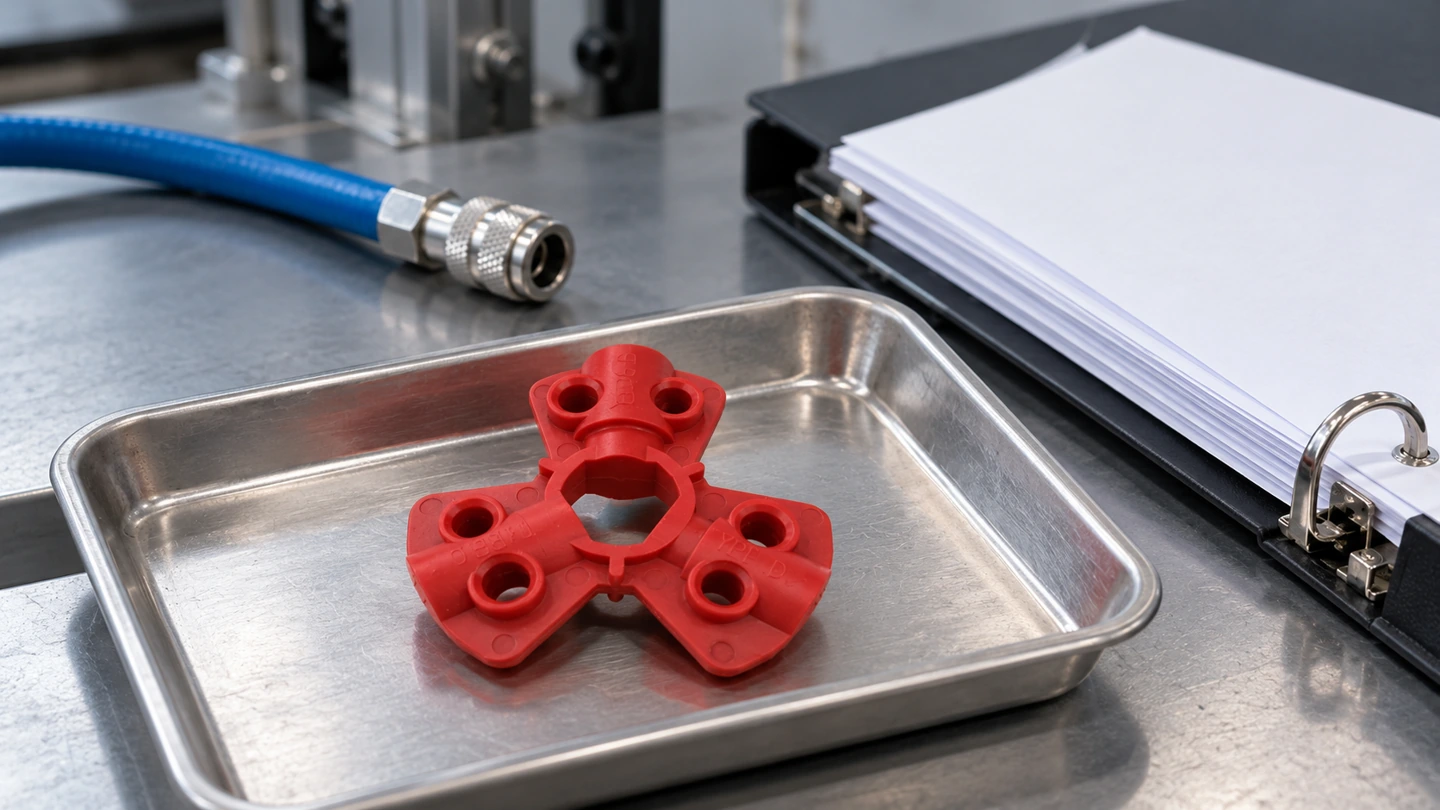
Verify the condition rather than trusting a locked handle
The lockout arrangement should be checked against the required equipment condition under the approved procedure. A zero-looking indicator at one location is not universal evidence that every connected volume is safe, and a disconnected hose does not necessarily account for gravity, spring or electrical energy on the machine.
29 CFR 1910.147(c)(4) requires specific procedure and verification elements, while (d)(6) addresses verification of isolation before work. The regulation does not supply one universal pneumatic accessory for every fitting. Supplier evidence should identify the actual model and compatible interfaces; avoid turning generic pressure or durability language into an unverified product rating.
Send a complete application enquiry to the supplier
Confirm the isolation method, document the actual interface, obtain the accessory instructions, and trial the sample within a controlled equipment review. Separately approve the residual-energy and movement controls. QVAND pneumatic products can be considered against those requirements. Compare total cost using fit approval, replacement availability and the effort needed to maintain a repeatable device register, rather than assuming a low-cost connector accessory resolves the whole machine assessment.
Frequently asked questions
Which pneumatic isolation details should a LOTO equipment specification include?
Include the isolation method, actual valve or connector geometry, accessory model, padlock fit and installation space. Keep residual-pressure and actuator controls in the equipment procedure.
How does isolating the air supply differ from controlling stored pressure?
Supply isolation prevents the relevant incoming energy under the approved arrangement; stored-pressure control addresses energy already present. Both can be needed, and neither should be assumed from the other’s visible state.
Why must cylinder or actuator movement be considered during pneumatic maintenance?
Pressure changes can cause movement, and gravity or stored mechanical forces may remain after air is isolated. The task assessment must address the real cylinder, actuator and connected load.
What is pneumatic lockout?
It is part of a procedure for controlling hazardous pneumatic energy during servicing. The required arrangement depends on the actual supply, residual energy and equipment hazards.
Which photos and connection details should accompany a pneumatic lockout inquiry?
Provide clear interface close-ups, manufacturer and connector or valve details, dimensions and surrounding access views. Do not rely on hose size or pressure alone.
How does locking a pneumatic connector differ from operating an isolation valve?
The devices restrain different interfaces and may belong to different isolation arrangements. Select the method from the equipment procedure and supplier instructions, not from a generic product name.
Why must residual compressed-air pressure be addressed separately?
Trapped or reaccumulating pressure can remain hazardous despite an isolated supply. The approved procedure must define how that energy is controlled and verified for the actual machine.
References
- 29 CFR 1910.147 — Control of hazardous energy
- CCOHS — Lockout/Tag out
- CCOHS — Hazardous Energy Control Programs
Approve the interface device and the residual-energy plan as two linked evidence checks.
Compare the relevant QVAND product options against your documented application, and contact the team with the actual equipment details, photographs and evidence requirements.